

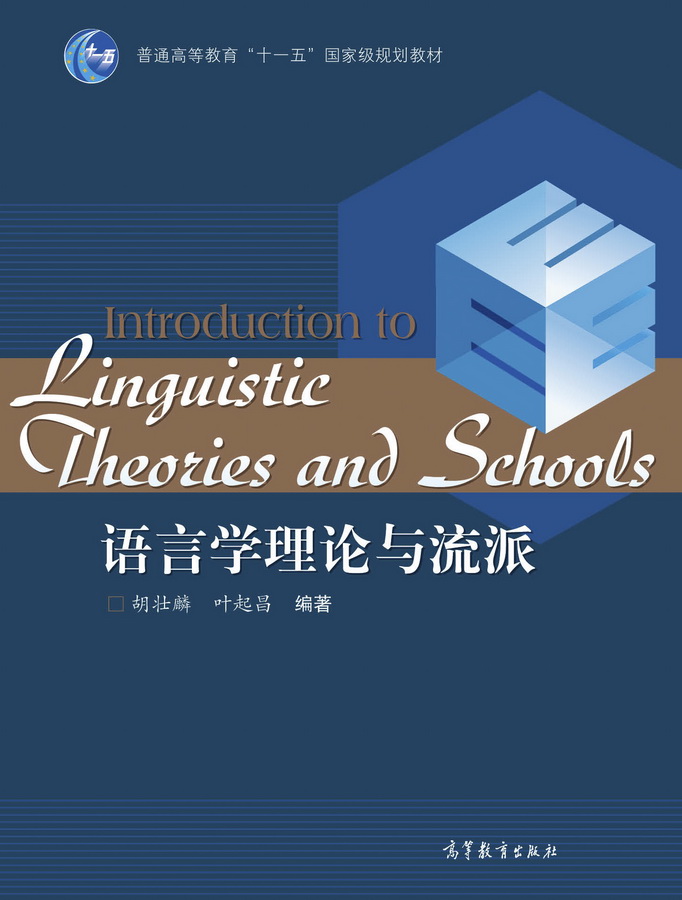
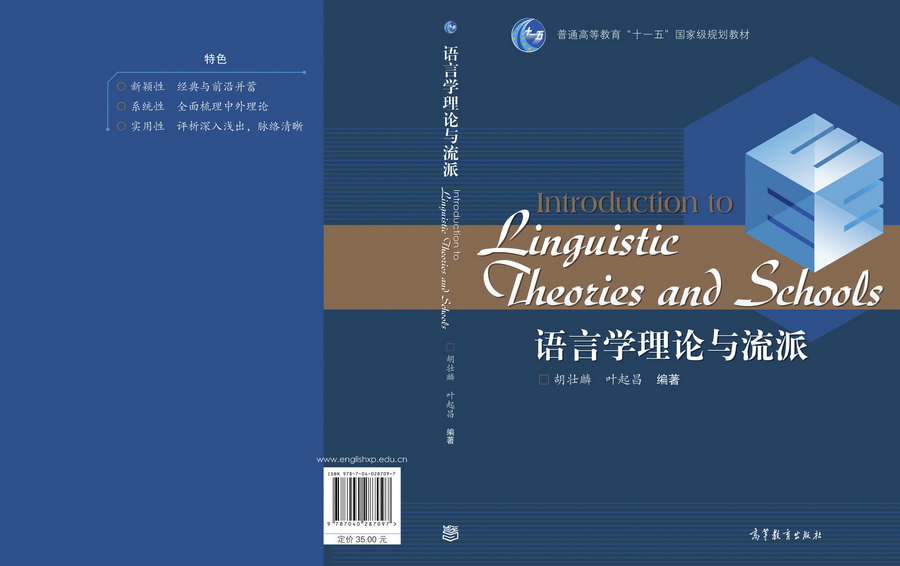
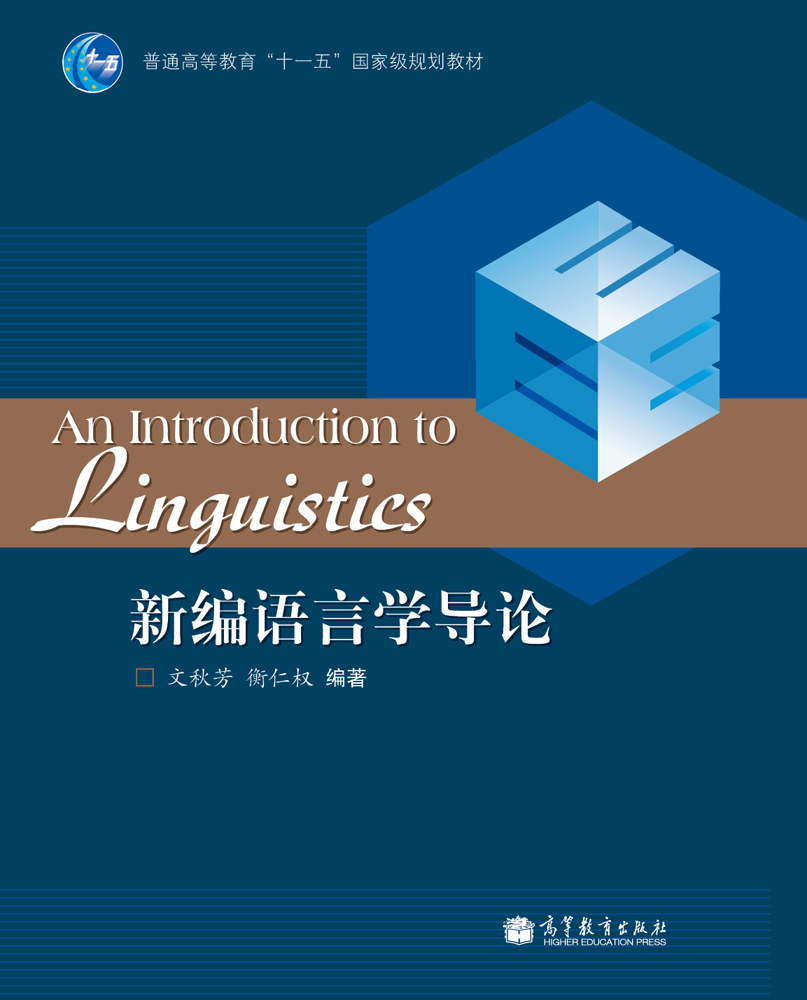

- 高等教育出版社
- 9787040287097
- 1
- 0041156825-6
- 16开
- 451
目录
目录
前辅文
Part One Linguistics in Antiquity
Chapter One The History of Linguistics Since Plato
1.1 Plato
1.1.1 Function of language
1.1.2 Nature versus convention
1.1.3 Idea and reality
1.1.4 Denotation and connotation
1.2 Aristotle
1.2.1 Rhetoric
1.2.2 Rational investigation of language
1.2.3 Categories
1.2.4 Form
1.2.5 Poetics
1.3 The Stoics
1.3.1 Logic
1.3.2 Signification, signifier and the name-bearer
1.4 The Alexandrian School
1.4.1 Meter and poetry
1.4.2 Dionysius Thrax
1.4.3 Apollonius Dyscolus
1.5 Roman linguistics
1.5.1 Varro
1.5.2 Priscian
1.6 Medieval linguistics
1.6.1 Speculative grammar
1.6.2 Modistae
1.7 Cartesian linguistics
1.7.1 Language is human-specific
1.7.2 Mind and body
1.7.3 Mind and ideas
1.7.4 Semantic interpretation versus phonetic interpretation
1.7.5 Universality and Port-Royal Grammar
1.8 Historical-Comparative linguistics and Neogrammarian
1.8.1 Historical linguistics
1.8.2 Comparative linguistics
1.8.3 The Neogrammarians
1.9 Linguistics in ancient India
Chapter Two The History of Linguistics in China
2.1 The Philosophy of language
2.1.1 Laozi: Arbitrariness
2.1.2 Confucius: Zhengming
2.1.3 Mozi: Language utilitarianism
2.1.4 Mencius: Innate moral intuition
2.1.5 Later Mohist dialecticians
2.1.6 Gongsun Long and Hui Shi:The School of Names
2.1.7 Zhuangzi: Skeptical relativism
2.1.8 Xunzi: Confucian conventionalism
2.2 Phonology
2.2.1 Old Chinese pronunciation studies
2.2.2 The influence of Buddhism
2.2.3 Middle Chinese phonological studies
2.2.4 Phonological studies in Ming and Qing dynasties
2.3 Chinese orthography
2.3.1 The invention of Chinese characters
2.3.2 The Six Scripts
2.3.3 A Dictionary of Etymology
2.3.4 The Right Element Principle
2.3.5 The Qing period
2.4 Philology
2.4.1 Scope of the discipline
2.4.2 Han dynasty scholars
2.4.3 From Yuan to Qing dynasties
Part Two Structuralism
Chapter Three Saussure: The Path to Synchrony
3.1 Background
3.2 General ideas
3.2.1 Issues of comparative and historical linguistics
3.2.2 Sound and thought
3.2.3 The role of linguistics in semiology
3.2.4 Diachrony and synchrony in linguistics
3.2.5 The langue-parole dichotomy
3.2.6 Arbitrariness and linearity of signs
3.2.7 Syntagmatic and associative relations
3.2.8 Values and differences
3.2.9 Syntagmatic and associative relations
3.3 Assessment
3.3.1 Merits
3.3.2 Issues
Chapter Four American Structuralism
4.1 Background
4.2 Franz Boas
4.3 Edward Sapir
4.3.1 Background
4.3.2 General ideas
4.3.3 Basic tenets
4.4 Leonard Bloomfield
4.4.1 Background
4.4.2 General ideas
4.4.3 The Bloomfieldian assumptions
4.5 Other American Structuralists
4.5.1 Sapir's followers
4.5.2 Post-Bloomfieldian scholars
4.6 Assessment
4.6.1 Merits
4.6.2 Issues
Part Three Pioneers in Functionalism
Chapter Five The Prague School
5.1 Background
5.2 General ideas
5.3 Basic tenets
5.3.1 System and function
5.3.2 Synchronic phonology
5.3.3 Theory of linguistic onomatology
5.3.4 Theory of functional syntax: the movement
of the mind in FSP
5.3.5 Linguistics and poetics
5.4 Assessment
5.4.1 Merits
5.5.2 Issues
Chapter Six The Copenhagen School
6.1 Background
6.2 General ideas
6.3 Basic tenets
6.3.1 Language is a form, not a substance
6.3.2 The four areas of study within every language
6.3.3 Certain relations in the process and the system
6.3.4 No one-to-one correspondents between content and expression
6.3.5 Linguistic theory prescribes a textual analysis
6.4 Assessment
6.4.1 Merits
6.4.2 Issues
Chapter Seven The London School
7.1 Background
7.2 General ideas
7.2.1 Bronislaw Kasper Malinowski
7.2.2 Firth
7.3 Basic tenets
7.3.1 Context of culture and context of situation
7.3.2 Meaning = function in context
7.3.3 Prosodic phonology
7.3.4 Some principles in Firthian linguistics
7.4 Neo-Firthian linguistics
7.4.1 Scale and category grammar
7.4.2 John Sinclair
7.4.3 Michael Gregory
7.5 Assessment
7.5.1 Merits
7.5.2 Issues
Part Four Functionalism
Chapter Eight Systemic-Functional Linguistics
8.1 Background
8.2 General ideas
8.3 M.A.K. Halliday
8.3.1 Metafunctions
8.3.2 System
8.3.3 Stratification
8.3.4 Function
8.3.5 Context
8.3.6 Probabilistic
8.3.7 Text and cohesion
8.3.8 Register
8.3.9 Language as Social Semiotic
8.3.10 Child language development
8.3.11 Grammatical metaphor
8.3.12 Appliable linguistics
8.4 Systemicists around M.A.K. Halliday
8.4.1 Ruqaiya Hasan
8.4.2 James R. Martin
8.4.3 Christian M.I.M. Matthiessen
8.4.4 Robin Fawcett
8.5 Assessment
8.5.1 Those outside the camp
8.5.2 Former systemic linguists
8.5.3 Views from the macro-perspective
Chapter Nine André Martinet and Robert de Beaugrande
9.1 André Martinet
9.1.1 Background
9.1.2 General ideas
9.1.3 Basic tenets
9.1.4 Assessment
9.2 Robert de Beaugrande
9.2.1 Background
9.2.2 General ideas
9.2.3 Basic tenets
Chapter Ten American Functionalism
10.1 Background
10.2 Kenneth Pike
10.2.1 Background
10.2.2 General ideas and tenets
10.2.3 Assessment
10.3 Sydney Lamb
10.3.1 Background
10.3.2 General ideas
10.3.3 Chief tenets
10.4 Wallace Chafe
10.4.1 Background
10.4.2 General ideas
10.4.3 Chief tenets
10.4.4 Assessment
10.5 Talmy Givón
10.5.1 Background
10.5.2 General ideas
10.5.3 Chief tenets
10.5.4 Assessment
10.6 Thompson, Li and Mann
10.6.1 Background
10.6.2 Ideas and tenets
10.7 Hopper, Bybee & Traugott
10.7.1 Background
10.7.2 General ideas and tenets
10.8 John Haiman
Chapter Eleven Pragmatics
11.1 Background
11.2 Main approaches
11.2.1 John Langshaw Austin
11.2.2 John R. Searle
11.2.3 Herbert Paul Grice
11.2.4 Kent Bach and Robert Harnish
11.2.5 David Benjamin Kaplan
11.2.6 Robert Stalnaker
11.2.7 Dan Sperber & Deirdre Wilson
11.3 Assessment
Part Five Generativism
Chapter Twelve Transformational Generative Grammar
12.1 Background
12.2 General ideas
12.3 Chief tenets
12.3.1 Transformational Grammar
12.3.2 Generative Grammar
12.3.3 Government and binding (1981-1990)
12.3.4 Minimalist Program (1990-present)
12.3.5 Phonology
12.3.6 Contributions to psychology
12.4 Assessment
Chapter Thirteen Non-Transformational Approaches
13.1 Background
13.2 Generative semantics
13.2.1 Background
13.2.2 General ideas and chief tenets
13.2.3 Assessment
13.3 Montague grammar
13.3.1 Background
13.3.2 General ideas
13.3.3 Chief tenets
13.3.4 Assessment
13.4 Lexical functional grammar
13.4.1 Background
13.4.2 General ideas and tenets
13.5 Generalized Phrase Structure Grammar
13.5.1 Background
13.5.2 General ideas and chief tenets
13.6 Head-driven Phrase Structure Grammar
13.6.1 Background
13.6.2 General ideas
13.6.3 Chief tenets
13.6.4 Assessment
13.7 Relational Grammar
13.7.1 Background
13.7.2 General ideas and chief tenets
13.8 Conceptual Semantics
13.8.1 Background
13.8.2 General ideas
13.8.3 Chief tenets
13.8.4 Assessment
Part Six Cognitivism
Chapter Fourteen Conceptual Metaphor Theory
14.1 Background
14.2 General ideas
14.3 Chief tenets
14.3.1 The role of metaphor
14.3.2 Categorization
14.3.3 Human reason
14.3.4 Embodiment
14.3.5 Conceptual Blending
14.3.6 Economy and Eliza Effect
14.3.7 Operational uniformity
14.3.8 Cognitive generalization
14.4 Assessment
14.4.1 Merits
14.4.2 Issues
Chapter Fifteen Cognitive Grammar and Construction Grammar
15.1 Cognitive Grammar
15.1.1 Background
15.1.2 General ideas
15.1.3 Chief tenets
15.1.4 Assessment
15.2 Construction Grammar
15.2.1 Background
15.2.2 General ideas and chief tenets
15.3 Other strands of Construction Grammar
15.3.1 Radical Construction Grammar
15.3.2 Embodied Construction Grammar
15.3.3 Fluid Construction Grammar
Chapter Sixteen Cognitive Semantics
16.1 Background
16.2 General ideas and chief tenets
16.2.1 Design features
16.2.2 Imaging systems
16.2.3 Force dynamics
16.3 Assessment
前辅文
Part One Linguistics in Antiquity
Chapter One The History of Linguistics Since Plato
1.1 Plato
1.1.1 Function of language
1.1.2 Nature versus convention
1.1.3 Idea and reality
1.1.4 Denotation and connotation
1.2 Aristotle
1.2.1 Rhetoric
1.2.2 Rational investigation of language
1.2.3 Categories
1.2.4 Form
1.2.5 Poetics
1.3 The Stoics
1.3.1 Logic
1.3.2 Signification, signifier and the name-bearer
1.4 The Alexandrian School
1.4.1 Meter and poetry
1.4.2 Dionysius Thrax
1.4.3 Apollonius Dyscolus
1.5 Roman linguistics
1.5.1 Varro
1.5.2 Priscian
1.6 Medieval linguistics
1.6.1 Speculative grammar
1.6.2 Modistae
1.7 Cartesian linguistics
1.7.1 Language is human-specific
1.7.2 Mind and body
1.7.3 Mind and ideas
1.7.4 Semantic interpretation versus phonetic interpretation
1.7.5 Universality and Port-Royal Grammar
1.8 Historical-Comparative linguistics and Neogrammarian
1.8.1 Historical linguistics
1.8.2 Comparative linguistics
1.8.3 The Neogrammarians
1.9 Linguistics in ancient India
Chapter Two The History of Linguistics in China
2.1 The Philosophy of language
2.1.1 Laozi: Arbitrariness
2.1.2 Confucius: Zhengming
2.1.3 Mozi: Language utilitarianism
2.1.4 Mencius: Innate moral intuition
2.1.5 Later Mohist dialecticians
2.1.6 Gongsun Long and Hui Shi:The School of Names
2.1.7 Zhuangzi: Skeptical relativism
2.1.8 Xunzi: Confucian conventionalism
2.2 Phonology
2.2.1 Old Chinese pronunciation studies
2.2.2 The influence of Buddhism
2.2.3 Middle Chinese phonological studies
2.2.4 Phonological studies in Ming and Qing dynasties
2.3 Chinese orthography
2.3.1 The invention of Chinese characters
2.3.2 The Six Scripts
2.3.3 A Dictionary of Etymology
2.3.4 The Right Element Principle
2.3.5 The Qing period
2.4 Philology
2.4.1 Scope of the discipline
2.4.2 Han dynasty scholars
2.4.3 From Yuan to Qing dynasties
Part Two Structuralism
Chapter Three Saussure: The Path to Synchrony
3.1 Background
3.2 General ideas
3.2.1 Issues of comparative and historical linguistics
3.2.2 Sound and thought
3.2.3 The role of linguistics in semiology
3.2.4 Diachrony and synchrony in linguistics
3.2.5 The langue-parole dichotomy
3.2.6 Arbitrariness and linearity of signs
3.2.7 Syntagmatic and associative relations
3.2.8 Values and differences
3.2.9 Syntagmatic and associative relations
3.3 Assessment
3.3.1 Merits
3.3.2 Issues
Chapter Four American Structuralism
4.1 Background
4.2 Franz Boas
4.3 Edward Sapir
4.3.1 Background
4.3.2 General ideas
4.3.3 Basic tenets
4.4 Leonard Bloomfield
4.4.1 Background
4.4.2 General ideas
4.4.3 The Bloomfieldian assumptions
4.5 Other American Structuralists
4.5.1 Sapir's followers
4.5.2 Post-Bloomfieldian scholars
4.6 Assessment
4.6.1 Merits
4.6.2 Issues
Part Three Pioneers in Functionalism
Chapter Five The Prague School
5.1 Background
5.2 General ideas
5.3 Basic tenets
5.3.1 System and function
5.3.2 Synchronic phonology
5.3.3 Theory of linguistic onomatology
5.3.4 Theory of functional syntax: the movement
of the mind in FSP
5.3.5 Linguistics and poetics
5.4 Assessment
5.4.1 Merits
5.5.2 Issues
Chapter Six The Copenhagen School
6.1 Background
6.2 General ideas
6.3 Basic tenets
6.3.1 Language is a form, not a substance
6.3.2 The four areas of study within every language
6.3.3 Certain relations in the process and the system
6.3.4 No one-to-one correspondents between content and expression
6.3.5 Linguistic theory prescribes a textual analysis
6.4 Assessment
6.4.1 Merits
6.4.2 Issues
Chapter Seven The London School
7.1 Background
7.2 General ideas
7.2.1 Bronislaw Kasper Malinowski
7.2.2 Firth
7.3 Basic tenets
7.3.1 Context of culture and context of situation
7.3.2 Meaning = function in context
7.3.3 Prosodic phonology
7.3.4 Some principles in Firthian linguistics
7.4 Neo-Firthian linguistics
7.4.1 Scale and category grammar
7.4.2 John Sinclair
7.4.3 Michael Gregory
7.5 Assessment
7.5.1 Merits
7.5.2 Issues
Part Four Functionalism
Chapter Eight Systemic-Functional Linguistics
8.1 Background
8.2 General ideas
8.3 M.A.K. Halliday
8.3.1 Metafunctions
8.3.2 System
8.3.3 Stratification
8.3.4 Function
8.3.5 Context
8.3.6 Probabilistic
8.3.7 Text and cohesion
8.3.8 Register
8.3.9 Language as Social Semiotic
8.3.10 Child language development
8.3.11 Grammatical metaphor
8.3.12 Appliable linguistics
8.4 Systemicists around M.A.K. Halliday
8.4.1 Ruqaiya Hasan
8.4.2 James R. Martin
8.4.3 Christian M.I.M. Matthiessen
8.4.4 Robin Fawcett
8.5 Assessment
8.5.1 Those outside the camp
8.5.2 Former systemic linguists
8.5.3 Views from the macro-perspective
Chapter Nine André Martinet and Robert de Beaugrande
9.1 André Martinet
9.1.1 Background
9.1.2 General ideas
9.1.3 Basic tenets
9.1.4 Assessment
9.2 Robert de Beaugrande
9.2.1 Background
9.2.2 General ideas
9.2.3 Basic tenets
Chapter Ten American Functionalism
10.1 Background
10.2 Kenneth Pike
10.2.1 Background
10.2.2 General ideas and tenets
10.2.3 Assessment
10.3 Sydney Lamb
10.3.1 Background
10.3.2 General ideas
10.3.3 Chief tenets
10.4 Wallace Chafe
10.4.1 Background
10.4.2 General ideas
10.4.3 Chief tenets
10.4.4 Assessment
10.5 Talmy Givón
10.5.1 Background
10.5.2 General ideas
10.5.3 Chief tenets
10.5.4 Assessment
10.6 Thompson, Li and Mann
10.6.1 Background
10.6.2 Ideas and tenets
10.7 Hopper, Bybee & Traugott
10.7.1 Background
10.7.2 General ideas and tenets
10.8 John Haiman
Chapter Eleven Pragmatics
11.1 Background
11.2 Main approaches
11.2.1 John Langshaw Austin
11.2.2 John R. Searle
11.2.3 Herbert Paul Grice
11.2.4 Kent Bach and Robert Harnish
11.2.5 David Benjamin Kaplan
11.2.6 Robert Stalnaker
11.2.7 Dan Sperber & Deirdre Wilson
11.3 Assessment
Part Five Generativism
Chapter Twelve Transformational Generative Grammar
12.1 Background
12.2 General ideas
12.3 Chief tenets
12.3.1 Transformational Grammar
12.3.2 Generative Grammar
12.3.3 Government and binding (1981-1990)
12.3.4 Minimalist Program (1990-present)
12.3.5 Phonology
12.3.6 Contributions to psychology
12.4 Assessment
Chapter Thirteen Non-Transformational Approaches
13.1 Background
13.2 Generative semantics
13.2.1 Background
13.2.2 General ideas and chief tenets
13.2.3 Assessment
13.3 Montague grammar
13.3.1 Background
13.3.2 General ideas
13.3.3 Chief tenets
13.3.4 Assessment
13.4 Lexical functional grammar
13.4.1 Background
13.4.2 General ideas and tenets
13.5 Generalized Phrase Structure Grammar
13.5.1 Background
13.5.2 General ideas and chief tenets
13.6 Head-driven Phrase Structure Grammar
13.6.1 Background
13.6.2 General ideas
13.6.3 Chief tenets
13.6.4 Assessment
13.7 Relational Grammar
13.7.1 Background
13.7.2 General ideas and chief tenets
13.8 Conceptual Semantics
13.8.1 Background
13.8.2 General ideas
13.8.3 Chief tenets
13.8.4 Assessment
Part Six Cognitivism
Chapter Fourteen Conceptual Metaphor Theory
14.1 Background
14.2 General ideas
14.3 Chief tenets
14.3.1 The role of metaphor
14.3.2 Categorization
14.3.3 Human reason
14.3.4 Embodiment
14.3.5 Conceptual Blending
14.3.6 Economy and Eliza Effect
14.3.7 Operational uniformity
14.3.8 Cognitive generalization
14.4 Assessment
14.4.1 Merits
14.4.2 Issues
Chapter Fifteen Cognitive Grammar and Construction Grammar
15.1 Cognitive Grammar
15.1.1 Background
15.1.2 General ideas
15.1.3 Chief tenets
15.1.4 Assessment
15.2 Construction Grammar
15.2.1 Background
15.2.2 General ideas and chief tenets
15.3 Other strands of Construction Grammar
15.3.1 Radical Construction Grammar
15.3.2 Embodied Construction Grammar
15.3.3 Fluid Construction Grammar
Chapter Sixteen Cognitive Semantics
16.1 Background
16.2 General ideas and chief tenets
16.2.1 Design features
16.2.2 Imaging systems
16.2.3 Force dynamics
16.3 Assessment
前辅文
Part One Linguistics in Antiquity
Chapter One The History of Linguistics Since Plato
1.1 Plato
1.1.1 Function of language
1.1.2 Nature versus convention
1.1.3 Idea and reality
1.1.4 Denotation and connotation
1.2 Aristotle
1.2.1 Rhetoric
1.2.2 Rational investigation of language
1.2.3 Categories
1.2.4 Form
1.2.5 Poetics
1.3 The Stoics
1.3.1 Logic
1.3.2 Signification, signifier and the name-bearer
1.4 The Alexandrian School
1.4.1 Meter and poetry
1.4.2 Dionysius Thrax
1.4.3 Apollonius Dyscolus
1.5 Roman linguistics
1.5.1 Varro
1.5.2 Priscian
1.6 Medieval linguistics
1.6.1 Speculative grammar
1.6.2 Modistae
1.7 Cartesian linguistics
1.7.1 Language is human-specific
1.7.2 Mind and body
1.7.3 Mind and ideas
1.7.4 Semantic interpretation versus phonetic interpretation
1.7.5 Universality and Port-Royal Grammar
1.8 Historical-Comparative linguistics and Neogrammarian
1.8.1 Historical linguistics
1.8.2 Comparative linguistics
1.8.3 The Neogrammarians
1.9 Linguistics in ancient India
Chapter Two The History of Linguistics in China
2.1 The Philosophy of language
2.1.1 Laozi: Arbitrariness
2.1.2 Confucius: Zhengming
2.1.3 Mozi: Language utilitarianism
2.1.4 Mencius: Innate moral intuition
2.1.5 Later Mohist dialecticians
2.1.6 Gongsun Long and Hui Shi:The School of Names
2.1.7 Zhuangzi: Skeptical relativism
2.1.8 Xunzi: Confucian conventionalism
2.2 Phonology
2.2.1 Old Chinese pronunciation studies
2.2.2 The influence of Buddhism
2.2.3 Middle Chinese phonological studies
2.2.4 Phonological studies in Ming and Qing dynasties
2.3 Chinese orthography
2.3.1 The invention of Chinese characters
2.3.2 The Six Scripts
2.3.3 A Dictionary of Etymology
2.3.4 The Right Element Principle
2.3.5 The Qing period
2.4 Philology
2.4.1 Scope of the discipline
2.4.2 Han dynasty scholars
2.4.3 From Yuan to Qing dynasties
Part Two Structuralism
Chapter Three Saussure: The Path to Synchrony
3.1 Background
3.2 General ideas
3.2.1 Issues of comparative and historical linguistics
3.2.2 Sound and thought
3.2.3 The role of linguistics in semiology
3.2.4 Diachrony and synchrony in linguistics
3.2.5 The langue-parole dichotomy
3.2.6 Arbitrariness and linearity of signs
3.2.7 Syntagmatic and associative relations
3.2.8 Values and differences
3.2.9 Syntagmatic and associative relations
3.3 Assessment
3.3.1 Merits
3.3.2 Issues
Chapter Four American Structuralism
4.1 Background
4.2 Franz Boas
4.3 Edward Sapir
4.3.1 Background
4.3.2 General ideas
4.3.3 Basic tenets
4.4 Leonard Bloomfield
4.4.1 Background
4.4.2 General ideas
4.4.3 The Bloomfieldian assumptions
4.5 Other American Structuralists
4.5.1 Sapir's followers
4.5.2 Post-Bloomfieldian scholars
4.6 Assessment
4.6.1 Merits
4.6.2 Issues
Part Three Pioneers in Functionalism
Chapter Five The Prague School
5.1 Background
5.2 General ideas
5.3 Basic tenets
5.3.1 System and function
5.3.2 Synchronic phonology
5.3.3 Theory of linguistic onomatology
5.3.4 Theory of functional syntax: the movement
of the mind in FSP
5.3.5 Linguistics and poetics
5.4 Assessment
5.4.1 Merits
5.5.2 Issues
Chapter Six The Copenhagen School
6.1 Background
6.2 General ideas
6.3 Basic tenets
6.3.1 Language is a form, not a substance
6.3.2 The four areas of study within every language
6.3.3 Certain relations in the process and the system
6.3.4 No one-to-one correspondents between content and expression
6.3.5 Linguistic theory prescribes a textual analysis
6.4 Assessment
6.4.1 Merits
6.4.2 Issues
Chapter Seven The London School
7.1 Background
7.2 General ideas
7.2.1 Bronislaw Kasper Malinowski
7.2.2 Firth
7.3 Basic tenets
7.3.1 Context of culture and context of situation
7.3.2 Meaning = function in context
7.3.3 Prosodic phonology
7.3.4 Some principles in Firthian linguistics
7.4 Neo-Firthian linguistics
7.4.1 Scale and category grammar
7.4.2 John Sinclair
7.4.3 Michael Gregory
7.5 Assessment
7.5.1 Merits
7.5.2 Issues
Part Four Functionalism
Chapter Eight Systemic-Functional Linguistics
8.1 Background
8.2 General ideas
8.3 M.A.K. Halliday
8.3.1 Metafunctions
8.3.2 System
8.3.3 Stratification
8.3.4 Function
8.3.5 Context
8.3.6 Probabilistic
8.3.7 Text and cohesion
8.3.8 Register
8.3.9 Language as Social Semiotic
8.3.10 Child language development
8.3.11 Grammatical metaphor
8.3.12 Appliable linguistics
8.4 Systemicists around M.A.K. Halliday
8.4.1 Ruqaiya Hasan
8.4.2 James R. Martin
8.4.3 Christian M.I.M. Matthiessen
8.4.4 Robin Fawcett
8.5 Assessment
8.5.1 Those outside the camp
8.5.2 Former systemic linguists
8.5.3 Views from the macro-perspective
Chapter Nine André Martinet and Robert de Beaugrande
9.1 André Martinet
9.1.1 Background
9.1.2 General ideas
9.1.3 Basic tenets
9.1.4 Assessment
9.2 Robert de Beaugrande
9.2.1 Background
9.2.2 General ideas
9.2.3 Basic tenets
Chapter Ten American Functionalism
10.1 Background
10.2 Kenneth Pike
10.2.1 Background
10.2.2 General ideas and tenets
10.2.3 Assessment
10.3 Sydney Lamb
10.3.1 Background
10.3.2 General ideas
10.3.3 Chief tenets
10.4 Wallace Chafe
10.4.1 Background
10.4.2 General ideas
10.4.3 Chief tenets
10.4.4 Assessment
10.5 Talmy Givón
10.5.1 Background
10.5.2 General ideas
10.5.3 Chief tenets
10.5.4 Assessment
10.6 Thompson, Li and Mann
10.6.1 Background
10.6.2 Ideas and tenets
10.7 Hopper, Bybee & Traugott
10.7.1 Background
10.7.2 General ideas and tenets
10.8 John Haiman
Chapter Eleven Pragmatics
11.1 Background
11.2 Main approaches
11.2.1 John Langshaw Austin
11.2.2 John R. Searle
11.2.3 Herbert Paul Grice
11.2.4 Kent Bach and Robert Harnish
11.2.5 David Benjamin Kaplan
11.2.6 Robert Stalnaker
11.2.7 Dan Sperber & Deirdre Wilson
11.3 Assessment
Part Five Generativism
Chapter Twelve Transformational Generative Grammar
12.1 Background
12.2 General ideas
12.3 Chief tenets
12.3.1 Transformational Grammar
12.3.2 Generative Grammar
12.3.3 Government and binding (1981-1990)
12.3.4 Minimalist Program (1990-present)
12.3.5 Phonology
12.3.6 Contributions to psychology
12.4 Assessment
Chapter Thirteen Non-Transformational Approaches
13.1 Background
13.2 Generative semantics
13.2.1 Background
13.2.2 General ideas and chief tenets
13.2.3 Assessment
13.3 Montague grammar
13.3.1 Background
13.3.2 General ideas
13.3.3 Chief tenets
13.3.4 Assessment
13.4 Lexical functional grammar
13.4.1 Background
13.4.2 General ideas and tenets
13.5 Generalized Phrase Structure Grammar
13.5.1 Background
13.5.2 General ideas and chief tenets
13.6 Head-driven Phrase Structure Grammar
13.6.1 Background
13.6.2 General ideas
13.6.3 Chief tenets
13.6.4 Assessment
13.7 Relational Grammar
13.7.1 Background
13.7.2 General ideas and chief tenets
13.8 Conceptual Semantics
13.8.1 Background
13.8.2 General ideas
13.8.3 Chief tenets
13.8.4 Assessment
Part Six Cognitivism
Chapter Fourteen Conceptual Metaphor Theory
14.1 Background
14.2 General ideas
14.3 Chief tenets
14.3.1 The role of metaphor
14.3.2 Categorization
14.3.3 Human reason
14.3.4 Embodiment
14.3.5 Conceptual Blending
14.3.6 Economy and Eliza Effect
14.3.7 Operational uniformity
14.3.8 Cognitive generalization
14.4 Assessment
14.4.1 Merits
14.4.2 Issues
Chapter Fifteen Cognitive Grammar and Construction Grammar
15.1 Cognitive Grammar
15.1.1 Background
15.1.2 General ideas
15.1.3 Chief tenets
15.1.4 Assessment
15.2 Construction Grammar
15.2.1 Background
15.2.2 General ideas and chief tenets
15.3 Other strands of Construction Grammar
15.3.1 Radical Construction Grammar
15.3.2 Embodied Construction Grammar
15.3.3 Fluid Construction Grammar
Chapter Sixteen Cognitive Semantics
16.1 Background
16.2 General ideas and chief tenets
16.2.1 Design features
16.2.2 Imaging systems
16.2.3 Force dynamics
16.3 Assessment
前辅文
Part One Linguistics in Antiquity
Chapter One The History of Linguistics Since Plato
1.1 Plato
1.1.1 Function of language
1.1.2 Nature versus convention
1.1.3 Idea and reality
1.1.4 Denotation and connotation
1.2 Aristotle
1.2.1 Rhetoric
1.2.2 Rational investigation of language
1.2.3 Categories
1.2.4 Form
1.2.5 Poetics
1.3 The Stoics
1.3.1 Logic
1.3.2 Signification, signifier and the name-bearer
1.4 The Alexandrian School
1.4.1 Meter and poetry
1.4.2 Dionysius Thrax
1.4.3 Apollonius Dyscolus
1.5 Roman linguistics
1.5.1 Varro
1.5.2 Priscian
1.6 Medieval linguistics
1.6.1 Speculative grammar
1.6.2 Modistae
1.7 Cartesian linguistics
1.7.1 Language is human-specific
1.7.2 Mind and body
1.7.3 Mind and ideas
1.7.4 Semantic interpretation versus phonetic interpretation
1.7.5 Universality and Port-Royal Grammar
1.8 Historical-Comparative linguistics and Neogrammarian
1.8.1 Historical linguistics
1.8.2 Comparative linguistics
1.8.3 The Neogrammarians
1.9 Linguistics in ancient India
Chapter Two The History of Linguistics in China
2.1 The Philosophy of language
2.1.1 Laozi: Arbitrariness
2.1.2 Confucius: Zhengming
2.1.3 Mozi: Language utilitarianism
2.1.4 Mencius: Innate moral intuition
2.1.5 Later Mohist dialecticians
2.1.6 Gongsun Long and Hui Shi:The School of Names
2.1.7 Zhuangzi: Skeptical relativism
2.1.8 Xunzi: Confucian conventionalism
2.2 Phonology
2.2.1 Old Chinese pronunciation studies
2.2.2 The influence of Buddhism
2.2.3 Middle Chinese phonological studies
2.2.4 Phonological studies in Ming and Qing dynasties
2.3 Chinese orthography
2.3.1 The invention of Chinese characters
2.3.2 The Six Scripts
2.3.3 A Dictionary of Etymology
2.3.4 The Right Element Principle
2.3.5 The Qing period
2.4 Philology
2.4.1 Scope of the discipline
2.4.2 Han dynasty scholars
2.4.3 From Yuan to Qing dynasties
Part Two Structuralism
Chapter Three Saussure: The Path to Synchrony
3.1 Background
3.2 General ideas
3.2.1 Issues of comparative and historical linguistics
3.2.2 Sound and thought
3.2.3 The role of linguistics in semiology
3.2.4 Diachrony and synchrony in linguistics
3.2.5 The langue-parole dichotomy
3.2.6 Arbitrariness and linearity of signs
3.2.7 Syntagmatic and associative relations
3.2.8 Values and differences
3.2.9 Syntagmatic and associative relations
3.3 Assessment
3.3.1 Merits
3.3.2 Issues
Chapter Four American Structuralism
4.1 Background
4.2 Franz Boas
4.3 Edward Sapir
4.3.1 Background
4.3.2 General ideas
4.3.3 Basic tenets
4.4 Leonard Bloomfield
4.4.1 Background
4.4.2 General ideas
4.4.3 The Bloomfieldian assumptions
4.5 Other American Structuralists
4.5.1 Sapir's followers
4.5.2 Post-Bloomfieldian scholars
4.6 Assessment
4.6.1 Merits
4.6.2 Issues
Part Three Pioneers in Functionalism
Chapter Five The Prague School
5.1 Background
5.2 General ideas
5.3 Basic tenets
5.3.1 System and function
5.3.2 Synchronic phonology
5.3.3 Theory of linguistic onomatology
5.3.4 Theory of functional syntax: the movement
of the mind in FSP
5.3.5 Linguistics and poetics
5.4 Assessment
5.4.1 Merits
5.5.2 Issues
Chapter Six The Copenhagen School
6.1 Background
6.2 General ideas
6.3 Basic tenets
6.3.1 Language is a form, not a substance
6.3.2 The four areas of study within every language
6.3.3 Certain relations in the process and the system
6.3.4 No one-to-one correspondents between content and expression
6.3.5 Linguistic theory prescribes a textual analysis
6.4 Assessment
6.4.1 Merits
6.4.2 Issues
Chapter Seven The London School
7.1 Background
7.2 General ideas
7.2.1 Bronislaw Kasper Malinowski
7.2.2 Firth
7.3 Basic tenets
7.3.1 Context of culture and context of situation
7.3.2 Meaning = function in context
7.3.3 Prosodic phonology
7.3.4 Some principles in Firthian linguistics
7.4 Neo-Firthian linguistics
7.4.1 Scale and category grammar
7.4.2 John Sinclair
7.4.3 Michael Gregory
7.5 Assessment
7.5.1 Merits
7.5.2 Issues
Part Four Functionalism
Chapter Eight Systemic-Functional Linguistics
8.1 Background
8.2 General ideas
8.3 M.A.K. Halliday
8.3.1 Metafunctions
8.3.2 System
8.3.3 Stratification
8.3.4 Function
8.3.5 Context
8.3.6 Probabilistic
8.3.7 Text and cohesion
8.3.8 Register
8.3.9 Language as Social Semiotic
8.3.10 Child language development
8.3.11 Grammatical metaphor
8.3.12 Appliable linguistics
8.4 Systemicists around M.A.K. Halliday
8.4.1 Ruqaiya Hasan
8.4.2 James R. Martin
8.4.3 Christian M.I.M. Matthiessen
8.4.4 Robin Fawcett
8.5 Assessment
8.5.1 Those outside the camp
8.5.2 Former systemic linguists
8.5.3 Views from the macro-perspective
Chapter Nine André Martinet and Robert de Beaugrande
9.1 André Martinet
9.1.1 Background
9.1.2 General ideas
9.1.3 Basic tenets
9.1.4 Assessment
9.2 Robert de Beaugrande
9.2.1 Background
9.2.2 General ideas
9.2.3 Basic tenets
Chapter Ten American Functionalism
10.1 Background
10.2 Kenneth Pike
10.2.1 Background
10.2.2 General ideas and tenets
10.2.3 Assessment
10.3 Sydney Lamb
10.3.1 Background
10.3.2 General ideas
10.3.3 Chief tenets
10.4 Wallace Chafe
10.4.1 Background
10.4.2 General ideas
10.4.3 Chief tenets
10.4.4 Assessment
10.5 Talmy Givón
10.5.1 Background
10.5.2 General ideas
10.5.3 Chief tenets
10.5.4 Assessment
10.6 Thompson, Li and Mann
10.6.1 Background
10.6.2 Ideas and tenets
10.7 Hopper, Bybee & Traugott
10.7.1 Background
10.7.2 General ideas and tenets
10.8 John Haiman
Chapter Eleven Pragmatics
11.1 Background
11.2 Main approaches
11.2.1 John Langshaw Austin
11.2.2 John R. Searle
11.2.3 Herbert Paul Grice
11.2.4 Kent Bach and Robert Harnish
11.2.5 David Benjamin Kaplan
11.2.6 Robert Stalnaker
11.2.7 Dan Sperber & Deirdre Wilson
11.3 Assessment
Part Five Generativism
Chapter Twelve Transformational Generative Grammar
12.1 Background
12.2 General ideas
12.3 Chief tenets
12.3.1 Transformational Grammar
12.3.2 Generative Grammar
12.3.3 Government and binding (1981-1990)
12.3.4 Minimalist Program (1990-present)
12.3.5 Phonology
12.3.6 Contributions to psychology
12.4 Assessment
Chapter Thirteen Non-Transformational Approaches
13.1 Background
13.2 Generative semantics
13.2.1 Background
13.2.2 General ideas and chief tenets
13.2.3 Assessment
13.3 Montague grammar
13.3.1 Background
13.3.2 General ideas
13.3.3 Chief tenets
13.3.4 Assessment
13.4 Lexical functional grammar
13.4.1 Background
13.4.2 General ideas and tenets
13.5 Generalized Phrase Structure Grammar
13.5.1 Background
13.5.2 General ideas and chief tenets
13.6 Head-driven Phrase Structure Grammar
13.6.1 Background
13.6.2 General ideas
13.6.3 Chief tenets
13.6.4 Assessment
13.7 Relational Grammar
13.7.1 Background
13.7.2 General ideas and chief tenets
13.8 Conceptual Semantics
13.8.1 Background
13.8.2 General ideas
13.8.3 Chief tenets
13.8.4 Assessment
Part Six Cognitivism
Chapter Fourteen Conceptual Metaphor Theory
14.1 Background
14.2 General ideas
14.3 Chief tenets
14.3.1 The role of metaphor
14.3.2 Categorization
14.3.3 Human reason
14.3.4 Embodiment
14.3.5 Conceptual Blending
14.3.6 Economy and Eliza Effect
14.3.7 Operational uniformity
14.3.8 Cognitive generalization
14.4 Assessment
14.4.1 Merits
14.4.2 Issues
Chapter Fifteen Cognitive Grammar and Construction Grammar
15.1 Cognitive Grammar
15.1.1 Background
15.1.2 General ideas
15.1.3 Chief tenets
15.1.4 Assessment
15.2 Construction Grammar
15.2.1 Background
15.2.2 General ideas and chief tenets
15.3 Other strands of Construction Grammar
15.3.1 Radical Construction Grammar
15.3.2 Embodied Construction Grammar
15.3.3 Fluid Construction Grammar
Chapter Sixteen Cognitive Semantics
16.1 Background
16.2 General ideas and chief tenets
16.2.1 Design features
16.2.2 Imaging systems
16.2.3 Force dynamics
16.3 Assessment
