

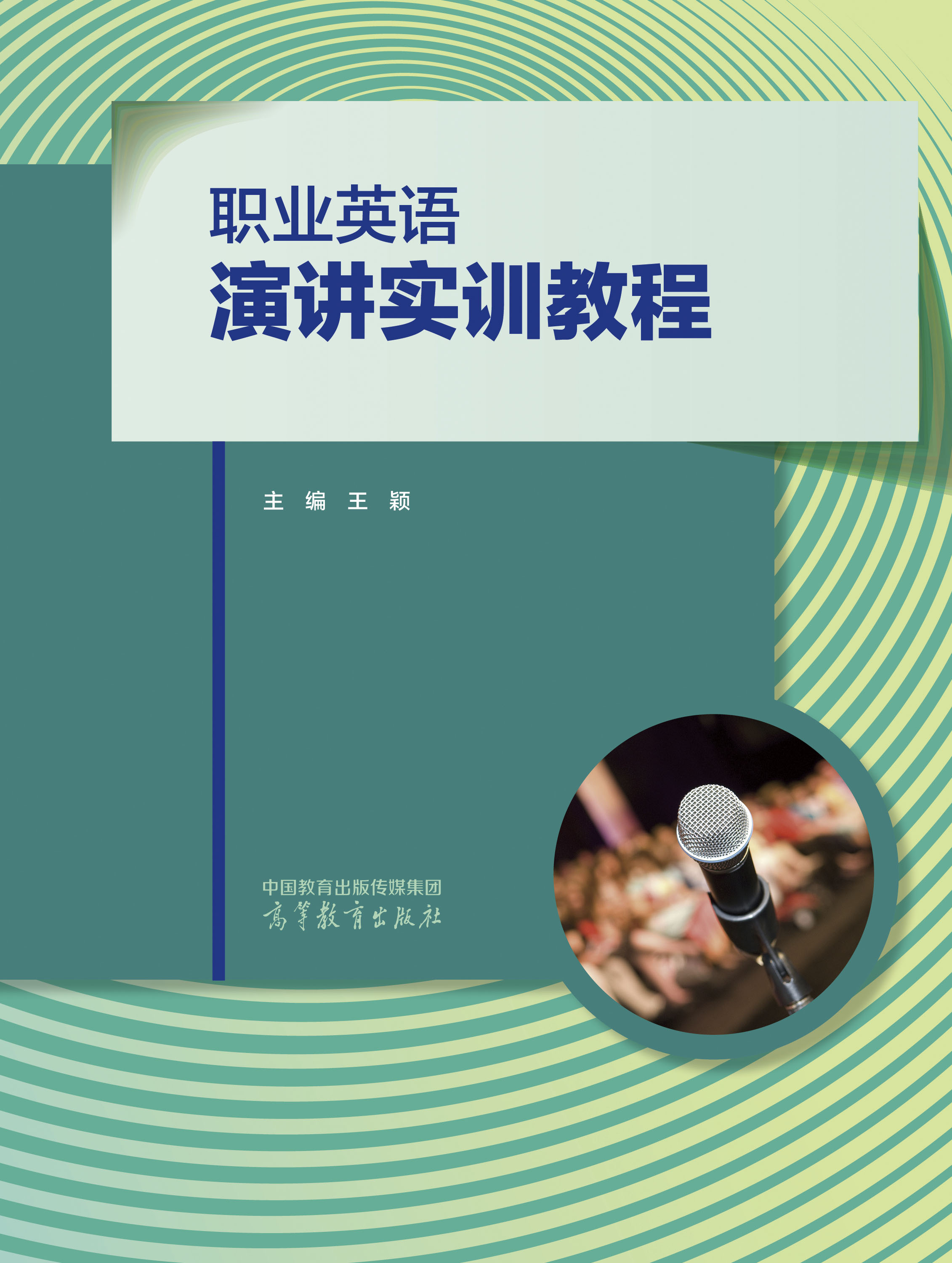



- 高等教育出版社
- 9787040617894
- 1版
- 44274308-4
- 异16开
- 200
- 公共基础课
- 公共基础课
- 公共基础课
- 公共基础课
- 通用
- 高职
目录
目录
前辅文
UNIT 1 Tailor Your Speech with Appropriate Speaking Skills
1.Interest
2.Inspire: Why learn public speaking
2.1 Misconceptions about public speaking
2.2 Public speaking and intercultural communicative competence
3.Instruct: Benefits of public speaking
3.1 Public speaking and critical thinking
3.2 Power of public speaking
3.3 Body language
4.Implement
5.Improve: Different styles of delivery
UNIT 2 Overcome Stage Fright
1.Interest
2.Inspire: What are you afraid of
2.1 A survey on nervousness
2.2 What is nervousness
3.Instruct: How to overcome stage fright
3.1 Overcoming stage fright at different stages
3.2 Become a confident speaker
3.3 Appearance
4.Implement
*5.Improve: Practicing relaxation
UNIT 3 Organize Your Speech
1.Interest
2.Inspire: Culture diversity
2.1 What hinders smooth communication
2.2 Strategies to work effectively with people from different cultures
3.Instruct: Speech outline
3.1 Make your speech logical
3.2 Patterns of organization
3.3 Postures for a speech
4.Implement
5.Improve: Cultural iceberg
UNIT 4 Begin and Conclude Your Speech
1.Interest
2.Inspire: Describing charts and graphs
2.1 Different charts and graphs
2.2 How to describe charts and graphs
3.Instruct: How to begin and conclude a speech
3.1 What is a good beginning
3.2 What is in the end
3.3 Silence is power
4.Implement
*5.Improve: Choose your expressions
UNIT 5 Support Your Ideas Based on Audience Analysis
1.Interest
2.Inspire: Audience analysis
3.Instruct: How to support ideas
3.1 How to develop your key ideas
3.2 Support an idea with evidence
3.3 Types of examples: brief, extended, and hypothetical
3.4 Eye contact
4.Implement
5.Improve: Sample speech analysis
UNIT 6 Speak to Persuade
1.Interest
2.Inspire: Being an active listener
2.1 What is 聽
2.2 How to become an active listener
3.Instruct: Modes of persuasion
3.1 Logical fallacies
3.2 Ethos, logos and pathos
3.3 Gestures
4.Implement
*5.Improve: Examples of persuasion
UNIT 7 Tell Your Story Better
1.Interest
2.Inspire: Why tell stories
2.1 Stories matter
2.2 Brand stories
3.Instruct: How to write and tell brand stories
3.1 Monroe’s Motivated Sequence
3.2 The Rule of Mehrabian
4.Implement
5.Improve: Tell a story better
UNIT 8 Use Rhetorical Techniques and Visual Aids
1.Interest
2.Inspire: Making a toast
2.1 When to make a toast
2.2 How to make a toast
3.Instruct: Rhetorical techniques and visual aids
3.1 Types of rhetorical techniques
3.2 Different occasions
3.3 Visual aids
4.Implement
5.Improve: New year messages
