





- 高等教育出版社
- 9787040423044
- 1版
- 41240142-4
- 16开
- 680
- 法学
- 法学类
- 法学类
- 本科 研究生及以上
内容简介
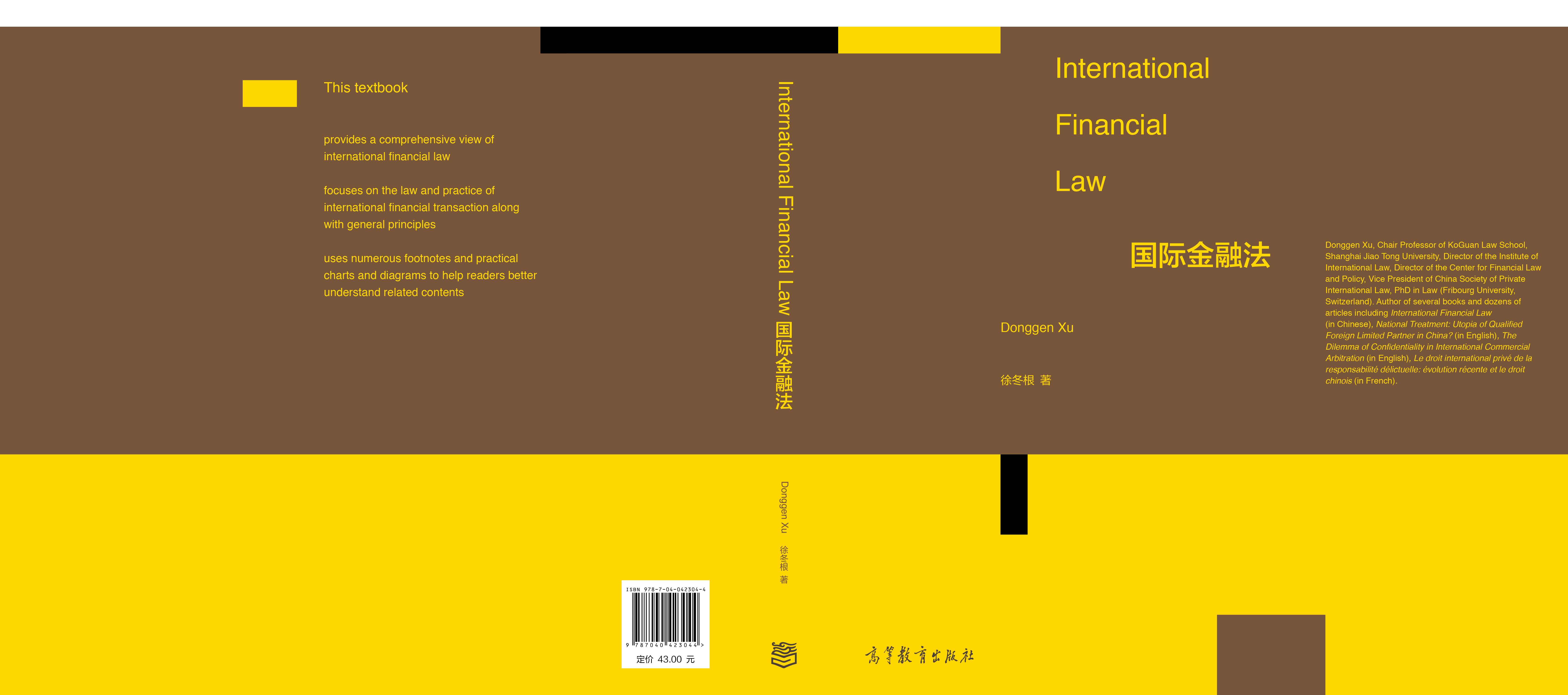
《国际金融法(英文版)》是上海交大法学院徐冬根教授所主持的“国家级双语教学示范课程”——国际金融法的配套教材。本书用英文创作,共分八章,分别对国际商业贷款法律制度、国际银团贷款法律制度、国际项目融资法律制度、国际贸易融资法律制度、国际支付法律制度、资产证券化法律制度、国际融资担保法律制度和国际金融法律实践中的法律意见等,做了详细的阐释。本书在有限篇幅内,把重点放在对国际金融法的法律制度与实践的阐释上,对于基本原则等理论知识尽量予以精简。同时,在理论阐释过程中,穿插术语精解(interpretation)、案例探讨(case)和例举说明(illustration),既全方位、多角度地深化对基本理论和制度的理解,又增加了可读性和趣味性。此外,书中使用了大量原创的示意图、流程图等图表,直观、形象、生动。
《国际金融法(英文版)》特别适合高等学校法学和国际金融专业双语 教学使用。
目录
目录
前辅文
CHAPTER 1 INTERNATIONAL COMMERCIAL LOAN
§1 Commercial Loan and Loan Agreement
1.1 Commercial Loan
1.2 Loan Agreement
§2 Facility and Interest
2.1 Facility
2.1.1 Term Loan
2.1.2 Revolving Loan
2.1.3 Other Sub-Facility
2.2 Interest and Fees
2.2.1 How Interest Works?
2.2.2 LIBOR and Margin
2.2.3 From LIBOR to SHIBOR
2.2.4 Fixed Interest Rate and Variable Interest Rate
2.2.5 Calculation and Payment of Interest
2.2.6 Cost and Fees
§3 Conditions Precedent and Notice of Drawdown
3.1 What Are Conditions Precedent?
3.2 Legal Features of Conditions Precedent
3.3 Purposes of Conditions Precedent
3.4 Notice of Drawdown
§4 Representations and Warranties
4.1 What Are Representations and Warranties?
4.2 Aspects Covered by Representations & Warranties
§5 Special Covenants
5.1 Negative Pledge Clause
5.1.1 Negative Pledge Clause in Legal Sense
5.1.2 Negative Pledge Clause in Functionality
5.1.3 World Bank Negative Pledge Clause
5.1.4 Do Basic Negative Pledge Clauses Create Security Interests?
5.2 Pari Passu Clause
5.3 Financial Covenants
5.4 Restrictions on Disposals of Assets Clause
5.5 Waiver of Sovereign Immunity
5.6 Evidence Clause of Indebtedness
§6 Events of Default and Default Remedies
6.1 Events of Default
6.2 Typical Clauses of Events of Default
6.3 Consequences of the Occurrence of Events of Default
6.4 Default Remedies
§7 Miscellaneous
7.1 Dispute Resolution Provisions
7.1.1 Generality
7.1.2 Arbitration
7.1.3 Jurisdiction
7.2 Governing Law
CHAPTER 2 SYNDICATED LOAN
§1 Generality
1.1 What Are Syndicated Loans?
1.2 Reasons for Syndicated Loans
1.2.1 Benefits of Syndicated Loan for Borrowers
1.2.2 Benefits of Syndicated Loan for Lenders
1.3 Legal Structure of Syndicated Loan
1.4 The Syndication Process in Outline
1.5 Typical Case of Syndicated Loan
1.5.1 Shanghai Disney Resort: Overview
1.5.2 Ownership: Main Investors of the Shanghai Disney Resort
1.5.3 Business and Financing Schedule
1.6 Club Loan: Special Syndicated Loan?
§2 Legal Issues in Initial Stage of Syndicated Loan
2.1 Mandate
2.2 Functions of Arranger
2.2.1 Primary Functions of Arranger
2.2.2 Multiple Arrangers in Same Syndicatied Loan
2.3 Information Memorandum
2.3.1 Is Information Memorandum Prospectus?
2.3.2 Arranger's Liability Because of Defect Information Memorandum
2.3.3 Avoidance of Arranger's Liability
2.3.4 Effect of Liability Disclaimers
2.4 Offer and Acceptance of Loan
2.4.1 Offer of Loan to the Borrower
2.4.2 Acceptance by Participants
2.5 Payment of Arranger Fees by Borrower
2.6 Does Arranger Owe Fiduciary Duties to Participants?
2.6.1 Fiduciary Duties under Common Law: Theory and Practice
2.6.2 View Denying Fiduciary Duties
2.6.3 “Fiduciary” Academic View
§3 Legal Issues Based on Syndicated Loan Agreement
3.1 Severalty
3.1.1 Several Obligation and Commitments of Participants
3.1.2 Defaulting Lender Issues
3.2 Majority Rule
3.2.1 Issues Decided by Majorities
3.2.2 Cases Accepted Majority Rule
3.2.3 Could Participant Claim Contrary Wishes of Majority?
3.2.4 Criticism on Majority Rule
3.3 Unanimous Consent
§4 Responsibilities and Roles of Agent Bank
4.1 Agent Bank:Partner to the Borrower
4.2 Agent Bank:Agent of Participants
4.3 Rights and Obligations of Agent Bank
4.4 Roles of Agent Bank
4.4.1 Certification of Compliance with Conditions Precedent
4.4.2 Payment Services
4.4.3 Monitoring Loan Covenants
4.4.4 Duty to Act on Occurrence of Default
4.5 Limitation on Liabilities of Agent Bank
4.5.1 Disclaimer of Liabilities
4.5.2 Ostrich Clauses
4.6 Fees and Expenses Paid to Agent Bank
CHAPTER 3 LOAN PARTICIPATION AND ASSIGNMENT
§1 Generality
1.1 What Is Loan Participation?
1.1.1 Borrower-Lead Bank Relationship
1.1.2 Lead Bank-Participant Relationship
1.1.3 Borrower-Participant Relationship
1.1.4 Loan Participation v.Syndicated Loan
1.2 Why Choose Loan Participations?
1.3 Retention by Lead Bank Risk of Loss
§2 Participations: Securities or Loans?
2.1 Are Participations Securities?
2.2 Participations Denied as Securities by Leading Cases
2.3 Legal Features of True Participations
§3 Transfer Forms of Loan Participation
3.1 Assignment
3.2 Sub-Participations
3.3 Novation
3.4 Risk Participations
3.5 Restrictions on Transfer of Loan Interest
§4 Classification of Loan Participations
4.1 Transfer of Participation as Loan
4.2 Transfer of Participation as Sale
4.3 Transfer of Participation as Trust
4.4 Proposal on Model Participation Agreement
§5 Mechanism for Participants Protection
5.1 Reducing Legal Risk of the Participant from Legal Documents
5.2 Participant's Remedies of Claim Against the Lead
5.2.1 Remedies Based on Lead's Misrepresentation Fraud
5.2.2 Remedies Based on Lead's Liable for Intentional Fraud
5.2.3 Remedies Based on Lead's Liable for Breach of Fiduciary Duty
5.2.4 Remedies Based on Fraud Claim Under Securities Law
CHAPTER 4 PROJECT FINANCE
§1 The Elaborate Structures
1.1 What Is Project Finance?
1.2 Project Company
1.2.1 Basic Forms for Ownership of Project
1.2.2 Social Responsibility of the Project Company
1.3 Other Participants of the Project Finance
1.3.1 Host Government and Its Concession
1.3.2 Sponsor
1.3.3 Lenders
1.3.4 Construction Contractor
1.3.5 Operator
1.3.6 Product Offtaker
1.3.7 Feedstock Supplier
1.4 Law and Practice of Project Finance in China
1.4.1 Development of BOT Project Finance in China
1.4.2 Regulations and Rules of the BOT Project Finance in China
1.4.3 Laibin B Power Station BOT Project Finance
§2 Capital Structure of the Project Finance
2.1 Various Sources for Financing
2.2 Equity and Debt Ratios
2.2.1 Equity
2.2.2 Debt
2.3 The Advantages of the Project Finance
2.3.1 Limited Recourse Debt Financing
2.3.2 Highly Leveraged Debt
2.3.3 Off-Balance-Sheet Treatment
§3 Risk Identification and Allocation
3.1 Overview of Various Risks
3.1.1 Classification of Risks
3.1.2 Allocation of Risks
3.2 Political Risks
3.2.1 What Are Political Risks?
3.2.2 Political Risk Insurance
3.2.3 Political Risk Insurance Providers
3.3 Legal Risks
3.3.1 Changes in Law
3.3.2 Legal System Status
3.4 Risks During Construction
3.5 Risks During Operation
3.5.1 Operating Risks
3.5.2 Market Risks
3.5.3 Currency Devaluation Risks
§4 Major Contracts of the Project Finance
4.1 Project Finance Contract
4.2 Project Collateral Arrangements
4.2.1 Pledge on Project Company's Shares
4.2.2 Pledge on Project Company's Receivables
4.2.3 Floating Charge on Whole Project's Assets
4.2.4 Setting of Step-In Rights
4.2.5 Assignment of Rights
4.2.6 Other Project Collateral Arrangements
4.3 Concession Contract
4.4 Construction Contract & Completion Guarantee
4.4.1 Construction Contract
4.4.2 Completion Guarantee
4.5 Operating Contract
4.6 Product Offtake Contracts
4.7 Feedstock Supply Contracts
4.8 Insurance Contract
CHAPTER 5 ASSET SECURITIZATION
§1 Generality of Asset Securitization
1.1 What Is Asset Securitization?
1.2 Reasons for Development of Asset Securitization
1.3 Rate Is Lower than Commercial Loan?
1.4 Process of Asset Securitization
§2 Major Legal Subjects and Elements
2.1 Originator
2.2 Special Purpose Vehicle(SPV)
2.3 True Sale
2.3.1 Factors Affecting True Sale
2.3.2 True Sale Determination
2.3.3 Other Legal Requirements for Transfer of Assets
2.4 Bankruptcy Remote
2.4.1 Traditional Bankruptcy Attacks
2.4.2 Bankruptcy Remote Structure
2.5 Credit Enhancement
2.5.1 Third-Party Credit Enhancement
2.5.2 Internal Credit Enhancements
2.6 Rating Asset-Backed Securities
2.6.1 What Are Credit Rating Agencies?
2.6.2 Evaluation of General Credit Risk
2.6.3 Evaluation of Cash Flow and Collateral Valuation
§3 Securitized Assets: From Credit Revenues to Intellectual Property
3.1 Case of Ford Credit Securitization
3.1.1 How Ford Credit Earn Revenues?
3.1.2 Ford Shape-Shifting Asset-Backed Securities
3.2 Case of Bowie Bonds: Securitization of Intellectual Property
3.2.1 Expansion of Assets of Securitization to Intellectual Property
3.2.2 Bowie Bonds: the First Securitization of Music Copyrights' Future Royalties
3.2.3 David Pullman and“Pullman Bonds”
§4 Asset Securitization in China
4.1 Development of Securitization in China
4.2 Framework of China's Securitization Laws and Regulations
4.3 Rules About Majors Elements of Securitization in China
4.3.1 Originator of Asset-Backed Securitization
4.3.2 Credit Assets
4.3.3 SPV/Trustee
4.3.4 True Sale
4.3.5 Credit Rating
4.3.6 Issuance and Trading of Asset-Backed Securities
4.4 Case Analysis of Securitization of China Construction Bank
4.4.1 Introduction
4.4.2 Legal Structure
4.4.3 Key Participants
CHAPTER 6 LETTERS OF CREDIT
§1 Generality of Letters of Credit
1.1 What Is Letter of Credit?
1.1.1 As Instrument of Payment
1.1.2 As Sub-Facility of Loan
1.1.3 As Conditional Commitment
1.1.4 As Obligation Rather than Contract
1.2 Parties and Their Relationship
1.2.1 Parties Involving Letter of Credit
1.2.2 Legal Relationship Among Parties
1.3 Laws Applicable to Letter of Credit
1.4 Principle of Independence of Letter of Credit
1.4.1 Independent from Contract Between Beneficiary and Account Party
1.4.2 Independent from Relationship Between Issuer and Account Party
1.5 Types of Letter of Credit
1.6 Letter of Credit Process
§2 Strict Compliance
2.1 Principle of Strict Compliance
2.1.1 Strict Compliance Rule
2.1.2 Rule of Appearance
2.1.3 Justification for the Principle of Strict Compliance
2.1.4 Examination of the Documents
2.2 Different Interpretation of Strict Compliance Rule
2.2.1 Literal Compliance
2.2.2 Substantial Compliance
2.2.3 Opinions from the Banker, Importer and Exporter
2.3 Refusal of Letter of Credit Payment and Case of Voest-Alpine Trading
2.3.1 Introduction of the Case
2.3.2 Facts of the Case
2.3.3 The Court's Analysis
§3 The Fraud Exception Rule
3.1 What Are Fraud and Fraud Exception Rule?
3.1.1 Fraud: Exception from Principle of Independence
3.1.2 The Sztejn Case
3.2 Conditions for Application of Fraud Exception Rule
3.2.1 Fraud Committed by the Beneficiary
3.2.2 Established Fraud
3.2.3 Material Fraud
3.2.4 Clear and Obvious Fraud
3.3 Restriction of the Fraud Exception
3.3.1 Fraud Made by a Third Party
3.3.2 Does Breach of Contract Constitute a Fraud?
3.3.3 Does Soft Clause Constitute a Fraud?
3.4 Fraud Exception v.Breach of Warranty
§4 Uniform Customs and Practice for Documentary Credits
4.1 UCP and ICC Banking Commission
4.2 Background of UCP
4.3 Modification on Layout
§5 Choice of Law Rule for Letters of Credit
5.1 UCP as Governing Law
5.2 Choice of Law Rule Under the Convention
5.3 Choice of Law Rule Under Revised UCC Article
5.4 Conflicting Between UCP and UCC
CHAPTER 7 GUARANTEES FOR INTERNATIONAL FINANCIAL TRANSACTION
§1 Guarantee Under Common Law
1.1 What Is Guarantee?
1.1.1 Guarantee May Be Conditional
1.1.2 Guarantees May Be Limited and Indirect
1.1.3 Guarantees May Be Documentary
1.1.4 Guarantee May Be Primary or Secondary
1.1.5 True Guarantee
1.1.6 Parent Company Guarantee and Downstream Guarantee
1.2 Discharge of Guarantor
1.2.1 Implied Release and Variation of Underlying Principle Contract
1.2.2 Release of Collateral or Discharge of any Co-Guarantor
1.2.3 Failure to Perfect a Security Interest
1.2.4 Invalidity of the Principal Obligation
1.2.5 Anti-Discharge by Indulgence Clauses
1.3 Bond and Indemnity
1.3.1 Guarantee v.Bond
1.3.2 Guarantee v.Indemnity
1.4 Suretyship and Guaranty
1.4.1 Suretyship Agreements
1.4.2 Primary Liability of Surety
1.4.3 Creditor's Duty of Disclosure to Surety
1.4.4 Independent Legal Advice for Vulnerable Surety
1.4.5 Surety's Defenses and “Impairment of Suretyship” Doctrine
1.4.6 Guaranty Agreements
1.5 Interpretation of Guarantee and Case of Marubeni
§2 Demand Guarantees
2.1 Introduction
2.1.1 What is Demand Guarantee?
2.1.2 Risk Distribution Function of Demand Guarantee
2.1.3 Payment Guarantee in Form of Demand Guarantee
2.1.4 Model Form of the Agreement on Demand Guarantee
2.2 Independence Principle and Fraud Exception
2.2.1 Independence Principle of Demand Guarantee
2.2.2 Rationales Behind the Independence Principle
2.2.3 Fraud Exception of the Independence Principle
2.3 New Exceptions to the Independence Principle
2.3.1 Unconscionability
2.3.2 Illegality
2.4 Parties and Governing Law of Demand Guarantees
2.4.1 Parties Involved in the Demand Guarantee
2.4.2 The Governing Law of Demand Guarantees
§3 Performance Bond
3.1 Introduction
3.1.1 What Is Performance Bond?
3.1.2 A Simple Hypothetical
3.2 Form of Performance Guarantee
3.3 Interpretation of Performance Bond
3.3.1 Performance Bond as Guarantee
3.3.2 Performance Bond Given by Noncommercial Entities Interpreted as Conditional Bond
3.3.3 Performance Guarantee as On-Demand Bond
3.4 The Edward Owen Case
3.4.1 Fact
3.4.2 Court's Analysis and Decision
3.5 Performance Bond v.Letter of Credit
§4 Standby Letter of Credit
4.1 What Is Standby Letter of Credit?
4.2 The Main Uses of Standby Letters of Credit
4.3 International Rules for Standbys
4.4 Standbys v.Independent Guarantees
CHAPTER 8 LEGAL OPINION FOR INTERNATIONAL FINANCIAL TRANSACTION
§1 Introduction of Legal Opinion
1.1 What Is Legal Opinion
1.1.1 Legal Opinion to the Client/Lender
1.1.2 Third-Party Legal Opinions
1.1.3 Opinion not as Form of Insurance
1.2 Purpose of Opinion
1.2.1 For Condition Precedent Requirement
1.2.2 For Due Diligence Review
1.2.3 For Closing of a Transaction
1.2.4 For Comfort to the Parties
1.2.5 For Efficiency
1.3 Assumptions
1.4 Facts and Law
1.5 Due Diligence for Legal Opinion
§2 Form and Elements of Opinion
2.1 Recitation of Opinion
2.1.1 Description of Role of Counsel
2.1.2 Jurisdictional Limitations
2.1.3 Documents and Matters Examined
2.1.4 Specific Qualifications or Exclusions
2.2 Contents of Opinion
2.2.1 Due Incorporation and Qualification
2.2.2 Power and Authority
2.2.3 No Conflict
2.2.4 Binding Effect
2.2.5 No Litigation
2.2.6 Creation and Perfection of Security Interest
2.2.7 Mortgages
2.2.8 Governing Law
§3 Liability of the Opining Lawyer
3.1 Contractual Liability
3.2 Liability to Third-Party Beneficiary
3.2.1 Intended Third-Party Beneficiary and Duty of Care
3.2.2 Fiduciary Duty to a Third-Party Beneficiary
3.3 Liability to Adverse Party
3.4 Liability in Tort of Negligence
3.4.1 Release of Privity for Negligent Misrepresentation Claim
3.4.2 Third Party's Justifiable Reliance
3.5 Liability in Tort of Fraud
3.5.1 Fraud or Omitting Material Fact from Disclosure
3.5.2 False Information as Misrepresentations
3.5.3 Material Misstatements of Fact
3.6 Could Disclaimers Exempt Attorney from Professional Liabilities?
§4 Experiences Refined from Cases and Practice
4.1 Rules of Legal Opinions
4.2 How Legal Opinions Form and Work
4.3 How to Reduce Professional Liability
4.4 Sample of Legal Opinions
