

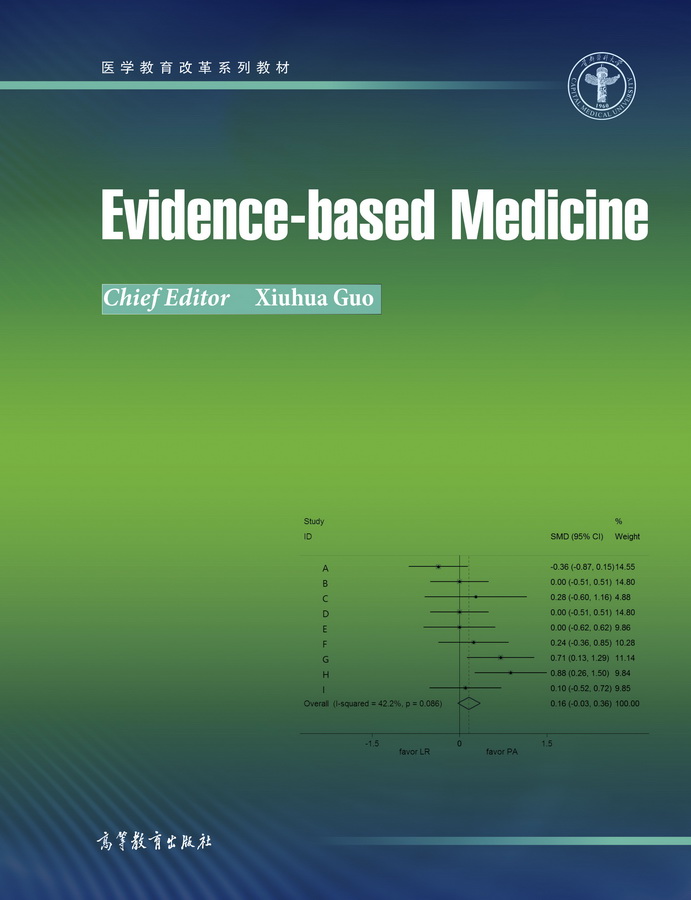
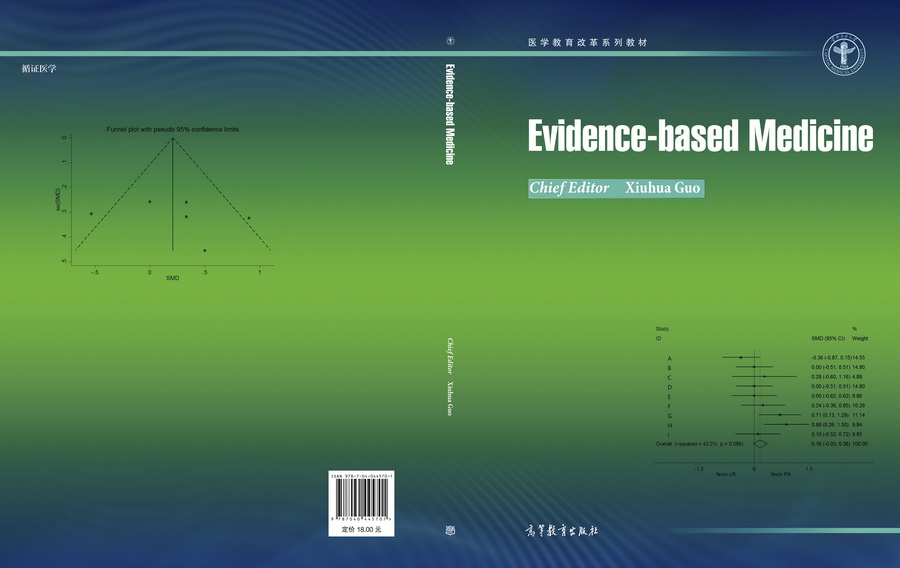





Evidence-based Medicine(循证医学)
定价:¥18.00
作者: 郭秀花
出版社:高等教育出版社
- 高等教育出版社
- 9787040445701
- 1版
- 40271474-5
- 大大16开
- 210
- 医学
- 临床医学类
- 医学
- 本科
目录
目录
前辅文
Chapter 1 Overview
1.1 Introduction
1.2 Definition of EBM
1.3 Significances of EBM
1.4 Development of EBM
1.5 Categories of EBM Practice
1.6 Practice of EBM
1.7 Assessing the Quality of Evidence
Chapter 2 Asking Answerable Clinical Questions
2.1 Introduction
2.2 Identifying Important Clinical Questions
2.3 Raising Answerable Clinical Questions
Chapter 3 Acquiring the Best Evidence
3.1 Introduction
3.2 Categories of Evidence based Information Resources
3.3 Common Evidence based Information Resources
3.4 Take a “5S” Approach to Evidence based Information Access
3.5 Basic Steps of Searching and Collecting Evidence
3.6 Applying the Evidence
Chapter 4 Basic Principles and Methods of Evaluating Evidence
4.1 Introduction
4.2 Classification and Levels of Evidence
4.3 Rationale and Basic Elements of Evidence Evaluation
4.4 Basic Contents and Methods of Evidence Evaluation
4.5 Clinical Practice Guidelines
Chapter 5 Analysis of Evidence and Evaluation for Causation and Risk Factors of Disease
5.1 Introduction
5.2 Clinical Practice: Exploration into Causes
5.3 Analysis and Evaluation of Causation and Risk Factors
Chapter 6 Analysis of Evidence and Evaluation for Diagnostic Tests
6.1 Introduction
6.2 Clinical Significances of Diagnostic Tests in the Practice of EBM
6.3 Designs and Evaluative Indicators of Diagnostic Tests
6.4 Evidence Evaluation of Diagnostic Tests
Chapter 7 Analysis of Evidence and Evaluation for Therapeutic Reports
7.1 Introduction
7.2 Source of Therapeutic Reports and Report Standards
7.3 Types, Characteristics and Commonly Used Indicators of Treatment Evidence
7.4 Evaluation of Individual Therapeutic Studies
Chapter 8 Analysis of Evidence and Evaluation for Prognosis Studies
8.1 Introduction
8.2 Prognosis Studies of Illness
8.3 Evidence Evaluation of Prognosis Studies
Chapter 9 Systematic Review
9.1 Introduction
9.2 Overview of Systematic Review
9.3 Basic Procedures of Systematic Review
9.4 Evaluation and Application of Systematic Review
Chapter 10 Meta analysis
10.1 Introduction
10.2 Basic Concepts
10.3 Steps to Perform a Meta analysis
10.4 Fixed Effect Model and Random Effect Model
10.5 Identification and Analysis of Publication Bias
10.6 Appropriate Utilizing and Evaluating the Result of a Meta analysis
Chapter 11 Cases of Evidence based Decision Making
11.1 Introduction
11.2 Evidence based Treatment of Endometriosis
11.3 T cell Interferon γ Release Assays for the Diagnosis of Tuberculosis Pleurisy
11.4 Treatment of the Pathological Vertebral Body Fracture of Lumbar Spine in Multiple Myeloma
