

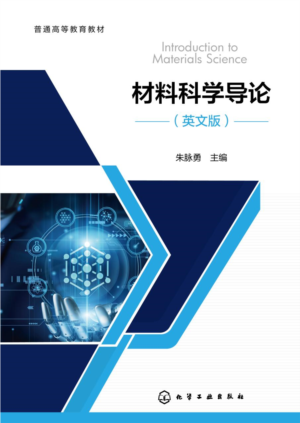

Introduction to Materials Science 材料科学导论(英文版)
定价:¥69.80
作者: 朱脉勇主编
出版时间:2026-08
出版社:化学工业出版社
- 化学工业出版社
- 9787122490193
- 1版
- 16开
- 2026-08
- 640
- 本科
作者简介
目录
Chapter 1 Introduction of materials 1
1.1 Definition of materials 2
1.2 History of materials development 2
1.3 Classification of materials 6
1.4 The contents of materials science 10
1.5 Methods for material selection 11
1.6 Development trends of materials science 14
1.7 Extending materials: about Changxu Shi 16
1.8 Problems 17
References 17
Chapter 2 Atomic structure and bonds 18
2.1 Historical theories of atoms 18
2.2 Atomic number, mass number, and atomic masses 24
2.3 Arrangement of electrons in atom 26
2.3.1 Quantum numbers 26
2.3.2 Arrangement of electrons in atoms 28
2.4 Periodic table of elements 31
2.5 Periodic law of elements 33
2.6 Atomic bonds 37
2.6.1 Primary interatomic bonds 37
2.6.2 Secondary bonds 42
2.6.3 Relationship between bonds and materials’ properties 44
2.7 Extending materials: about Dmitri Ivanovich Mendeleev 45
2.8 Problems 46
References 48
Chapter 3 Crystal structure 49
3.1 Amorphous and crystalline materials 49
3.2 Lattice points, basis and crystal structure 55
3.2.1 The lattice, basis and crystal structure 55
3.2.2 Unit cell and primitive cell 56
3.2.3 Properties of primitive cells 57
3.3 Crystal system and common crystal structures 57
3.4 Crystallographic index 59
3.5 Crystal defect 66
3.5.1 Point defects 66
3.5.2 Line defects 67
3.5.3 Planar defects 68
3.5.4 Volume defects 69
3.6 Extending materials: about Auguste Bravais 69
3.7 Problems 70
References 71
Chapter 4 Diffusion 73
4.1 Introduction 73
4.2 Diffusion mechanism 74
4.2.1 The driving force for diffusion 74
4.2.2 Atomic diffusion in solids 76
4.3 Diffusion models and equations 79
4.4 Factors affecting diffusion 84
4.5 Reaction diffusion 89
4.6 Extending materials: about Adolf Fick 93
4.7 Problems 94
References 96
Chapter 5 Phase Equilibrium 98
5.1 Introduction 99
5.2 General conditions for balance of polyphase system 100
5.3 Phase law 102
5.4 Phase equilibrium for one-component systems 105
5.5 Phase diagram of two-component system and its application 113
5.5.1 Ideal two-component liquid mixtures—fully miscible two-liquid systems 114
5.5.2 Lever rule 116
5.5.3 The basic principles of distillation (or rectification) 117
5.5.4 Non-ideal two-component liquid mixture 118
5.5.5 Partially miscible biliquid system 122
5.5.6 Immiscible bi-liquid system—Steam distillation 123
5.5.7 Simple low eutectic binary phase diagram 125
5.5.8 System for forming compounds 132
5.5.9 Gas-solid equilibrium diagram-dissociation equilibrium diagram of hydrate (solid) 135
5.5.10 A phase diagram in which both liquid and solid phases are completely miscible 138
5.5.11 Two-component phase diagram of solid partial miscibility 139
5.5.12 Regional melting 141
5.6 Extending materials: about Marie Sklodowska Curie 143
5.7 Problems 144
References 151
Chapter 6 Metallic materials 153
6.1 Introduction 153
6.2 Production of metal materials 154
6.3 Iron and steel 155
6.3.1 Iron ores 157
6.3.2 HIsarna process 157
6.3.3 Reducing with hydrogen 158
6.3.4 Reducing with ammonia 161
6.3.5 Production of pig iron by reduction with gas 161
6.3.6 Reduction of iron ore with coal 163
6.3.7 Combustion synthesis 163
6.3.8 Smelting reduction of high iron red mud 164
6.4 Application of metallic materials 165
6.5 Extending materials: about Marie Sklodowska Curie 167
6.6 Problems 167
References 168
Chapter 7 Ceramic materials 169
7.1 Introduction 169
7.2 Structure of ceramic materials 171
7.2.1 Ionic bonding in simple ceramic compounds 171
7.2.2 Covalent bonding in simple ceramic compounds 175
7.2.3 Metallic bonding in simple ceramic compounds 179
7.3 Synthesis of ceramics 182
7.3.1 Solid state reaction 182
7.3.2 Chemical vapor deposition 183
7.3.3 Molten salt assisted synthesis 184
7.3.4 Solution based reaction 187
7.3.5 Sol-gel reaction 188
7.3.6 Electrospinning 192
7.3.7 Template method 193
7.3.8 Additive manufacturing 197
7.4 Application 198
7.4.1 Oil-water separation 199
7.4.2 Engine Exhaust Treatment 200
7.5 Extending materials: about Charles Kuen Kao 201
7.6 Problems 201
References 202
Chapter 8 Polymer materials 204
8.1 The establishment and development of polymer science 204
8.1.1 The development history of polymer science 204
8.1.2 Polymer science system and its development trend 207
8.2 The basic concept of polymeric compounds 209
8.2.1 Polymer compound and polymer 209
8.2.2 The molecular weight and polydispersity of the polymer 210
8.3 Classification and nomenclature of polymers 212
8.3.1 Classification of polymers 212
8.3.2 Nomenclature of polymers 216
8.3.3 Writing and English abbreviation of polymer structure formula 217
8.4 Classification of polymer synthesis reactions 218
8.4.1 Classification by reaction mechanism 219
8.4.2 Chemical transformation of polymers 219
8.5 Structure, physical state and properties of polymers 219
8.5.1 Structural characteristics of polymers 219
8.5.2 The structure level of polymers 220
8.5.3 Physical state of polymers 221
8.5.4 Classification by elemental composition and structural change relationship 223
8.6 Extending materials: about Hermann Staudinger 224
8.7 Problems 225
References 226
Chapter 9 Composite materials 227
9.1 Introduction 228
9.2 Matrix, reinforcement and interface 232
9.2.1 Matrix phase 232
9.2.2 Reinforcement 233
9.2.3 Interfaces 241
9.3 Modification of reinforcement 244
9.3.1 Extraction by solvent 244
9.3.2 Plasma treatment 245
9.3.3 Thermal oxidation 247
9.3.4 Chemical treatment 249
9.4 Synthesis of composite 251
9.4.1 MMC synthesis 251
9.4.2 CMC synthesis 253
9.4.3 PMC synthesis 263
9.5 Application of composite 268
9.5.1 Catalysis 268
9.5.2 Syngas cleaning 268
9.5.3 Electrolyte 270
9.5.4 Energy conversion and storage 272
9.5.5 Aviation deicing 275
9.5.6 Thermal barrier coating 277
9.6 Extending materials: about Stephanie Knolek 279
9.7 Problems 279
References 279
Chapter 10 Nanomaterials 282
10.1 Definition 282
10.2 Classification 284
10.3 Nano effect 285
10.3.1 Surface effect 285
10.3.2 Size effect 286
10.3.3 Quantum effect 288
10.4 Synthesis 288
10.4.1 Top-down approach 289
10.4.2 Bottom-up approach 293
10.5 Extending materials: about Tao Zhang 304
10.6 Problems 304
References 304
Chapter 11 Recycling of materials 306
11.1 Introduction 307
11.2 Recycling of metal/alloy materials 310
11.2.1 Direct recycling 311
11.2.2 Pyrometallurgy 312
11.2.3 Hydrometallurgy 313
11.3 Recycling of ceramics 316
11.4 Recycling polymers 318
11.4.1 Mechanical recycling 319
11.4.2 Recycling into monomer 320
11.4.3 Recycling into fracture polymer 322
11.4.4 Recycling into value-added molecules 323
11.4.5 Recycling into fuel/energy 324
11.5 Recycling of composites 326
11.5.1 Recycling metal matrix composite 327
11.5.2 Recycling ceramic matrix composite 328
11.5.3 Recycling carbon fiber from CFRP 329
11.6 Extending materials: about Debang Hou 330
11.7 Problems 331
References 331
Chapter 12 Supramolecular materials 334
12.1 Introduction 334
12.2 Cyclodextrin 336
12.2.1 Structure of cyclodextrins 336
12.2.2 Cyclodextrin derivatives 337
12.2.3 Molecular recognition of cyclodextrin 337
12.2.4 Reorganization of cyclodextrin molecules based on responses to environmental factors 338
12.2.5 Temperature responsive type 339
12.2.6 Light responsive type 342
12.2.7 Chemically responsive 344
12.3 Extending materials: about Jean-Marie Lehn 345
12.4 Problems 345
References 345
1.1 Definition of materials 2
1.2 History of materials development 2
1.3 Classification of materials 6
1.4 The contents of materials science 10
1.5 Methods for material selection 11
1.6 Development trends of materials science 14
1.7 Extending materials: about Changxu Shi 16
1.8 Problems 17
References 17
Chapter 2 Atomic structure and bonds 18
2.1 Historical theories of atoms 18
2.2 Atomic number, mass number, and atomic masses 24
2.3 Arrangement of electrons in atom 26
2.3.1 Quantum numbers 26
2.3.2 Arrangement of electrons in atoms 28
2.4 Periodic table of elements 31
2.5 Periodic law of elements 33
2.6 Atomic bonds 37
2.6.1 Primary interatomic bonds 37
2.6.2 Secondary bonds 42
2.6.3 Relationship between bonds and materials’ properties 44
2.7 Extending materials: about Dmitri Ivanovich Mendeleev 45
2.8 Problems 46
References 48
Chapter 3 Crystal structure 49
3.1 Amorphous and crystalline materials 49
3.2 Lattice points, basis and crystal structure 55
3.2.1 The lattice, basis and crystal structure 55
3.2.2 Unit cell and primitive cell 56
3.2.3 Properties of primitive cells 57
3.3 Crystal system and common crystal structures 57
3.4 Crystallographic index 59
3.5 Crystal defect 66
3.5.1 Point defects 66
3.5.2 Line defects 67
3.5.3 Planar defects 68
3.5.4 Volume defects 69
3.6 Extending materials: about Auguste Bravais 69
3.7 Problems 70
References 71
Chapter 4 Diffusion 73
4.1 Introduction 73
4.2 Diffusion mechanism 74
4.2.1 The driving force for diffusion 74
4.2.2 Atomic diffusion in solids 76
4.3 Diffusion models and equations 79
4.4 Factors affecting diffusion 84
4.5 Reaction diffusion 89
4.6 Extending materials: about Adolf Fick 93
4.7 Problems 94
References 96
Chapter 5 Phase Equilibrium 98
5.1 Introduction 99
5.2 General conditions for balance of polyphase system 100
5.3 Phase law 102
5.4 Phase equilibrium for one-component systems 105
5.5 Phase diagram of two-component system and its application 113
5.5.1 Ideal two-component liquid mixtures—fully miscible two-liquid systems 114
5.5.2 Lever rule 116
5.5.3 The basic principles of distillation (or rectification) 117
5.5.4 Non-ideal two-component liquid mixture 118
5.5.5 Partially miscible biliquid system 122
5.5.6 Immiscible bi-liquid system—Steam distillation 123
5.5.7 Simple low eutectic binary phase diagram 125
5.5.8 System for forming compounds 132
5.5.9 Gas-solid equilibrium diagram-dissociation equilibrium diagram of hydrate (solid) 135
5.5.10 A phase diagram in which both liquid and solid phases are completely miscible 138
5.5.11 Two-component phase diagram of solid partial miscibility 139
5.5.12 Regional melting 141
5.6 Extending materials: about Marie Sklodowska Curie 143
5.7 Problems 144
References 151
Chapter 6 Metallic materials 153
6.1 Introduction 153
6.2 Production of metal materials 154
6.3 Iron and steel 155
6.3.1 Iron ores 157
6.3.2 HIsarna process 157
6.3.3 Reducing with hydrogen 158
6.3.4 Reducing with ammonia 161
6.3.5 Production of pig iron by reduction with gas 161
6.3.6 Reduction of iron ore with coal 163
6.3.7 Combustion synthesis 163
6.3.8 Smelting reduction of high iron red mud 164
6.4 Application of metallic materials 165
6.5 Extending materials: about Marie Sklodowska Curie 167
6.6 Problems 167
References 168
Chapter 7 Ceramic materials 169
7.1 Introduction 169
7.2 Structure of ceramic materials 171
7.2.1 Ionic bonding in simple ceramic compounds 171
7.2.2 Covalent bonding in simple ceramic compounds 175
7.2.3 Metallic bonding in simple ceramic compounds 179
7.3 Synthesis of ceramics 182
7.3.1 Solid state reaction 182
7.3.2 Chemical vapor deposition 183
7.3.3 Molten salt assisted synthesis 184
7.3.4 Solution based reaction 187
7.3.5 Sol-gel reaction 188
7.3.6 Electrospinning 192
7.3.7 Template method 193
7.3.8 Additive manufacturing 197
7.4 Application 198
7.4.1 Oil-water separation 199
7.4.2 Engine Exhaust Treatment 200
7.5 Extending materials: about Charles Kuen Kao 201
7.6 Problems 201
References 202
Chapter 8 Polymer materials 204
8.1 The establishment and development of polymer science 204
8.1.1 The development history of polymer science 204
8.1.2 Polymer science system and its development trend 207
8.2 The basic concept of polymeric compounds 209
8.2.1 Polymer compound and polymer 209
8.2.2 The molecular weight and polydispersity of the polymer 210
8.3 Classification and nomenclature of polymers 212
8.3.1 Classification of polymers 212
8.3.2 Nomenclature of polymers 216
8.3.3 Writing and English abbreviation of polymer structure formula 217
8.4 Classification of polymer synthesis reactions 218
8.4.1 Classification by reaction mechanism 219
8.4.2 Chemical transformation of polymers 219
8.5 Structure, physical state and properties of polymers 219
8.5.1 Structural characteristics of polymers 219
8.5.2 The structure level of polymers 220
8.5.3 Physical state of polymers 221
8.5.4 Classification by elemental composition and structural change relationship 223
8.6 Extending materials: about Hermann Staudinger 224
8.7 Problems 225
References 226
Chapter 9 Composite materials 227
9.1 Introduction 228
9.2 Matrix, reinforcement and interface 232
9.2.1 Matrix phase 232
9.2.2 Reinforcement 233
9.2.3 Interfaces 241
9.3 Modification of reinforcement 244
9.3.1 Extraction by solvent 244
9.3.2 Plasma treatment 245
9.3.3 Thermal oxidation 247
9.3.4 Chemical treatment 249
9.4 Synthesis of composite 251
9.4.1 MMC synthesis 251
9.4.2 CMC synthesis 253
9.4.3 PMC synthesis 263
9.5 Application of composite 268
9.5.1 Catalysis 268
9.5.2 Syngas cleaning 268
9.5.3 Electrolyte 270
9.5.4 Energy conversion and storage 272
9.5.5 Aviation deicing 275
9.5.6 Thermal barrier coating 277
9.6 Extending materials: about Stephanie Knolek 279
9.7 Problems 279
References 279
Chapter 10 Nanomaterials 282
10.1 Definition 282
10.2 Classification 284
10.3 Nano effect 285
10.3.1 Surface effect 285
10.3.2 Size effect 286
10.3.3 Quantum effect 288
10.4 Synthesis 288
10.4.1 Top-down approach 289
10.4.2 Bottom-up approach 293
10.5 Extending materials: about Tao Zhang 304
10.6 Problems 304
References 304
Chapter 11 Recycling of materials 306
11.1 Introduction 307
11.2 Recycling of metal/alloy materials 310
11.2.1 Direct recycling 311
11.2.2 Pyrometallurgy 312
11.2.3 Hydrometallurgy 313
11.3 Recycling of ceramics 316
11.4 Recycling polymers 318
11.4.1 Mechanical recycling 319
11.4.2 Recycling into monomer 320
11.4.3 Recycling into fracture polymer 322
11.4.4 Recycling into value-added molecules 323
11.4.5 Recycling into fuel/energy 324
11.5 Recycling of composites 326
11.5.1 Recycling metal matrix composite 327
11.5.2 Recycling ceramic matrix composite 328
11.5.3 Recycling carbon fiber from CFRP 329
11.6 Extending materials: about Debang Hou 330
11.7 Problems 331
References 331
Chapter 12 Supramolecular materials 334
12.1 Introduction 334
12.2 Cyclodextrin 336
12.2.1 Structure of cyclodextrins 336
12.2.2 Cyclodextrin derivatives 337
12.2.3 Molecular recognition of cyclodextrin 337
12.2.4 Reorganization of cyclodextrin molecules based on responses to environmental factors 338
12.2.5 Temperature responsive type 339
12.2.6 Light responsive type 342
12.2.7 Chemically responsive 344
12.3 Extending materials: about Jean-Marie Lehn 345
12.4 Problems 345
References 345
