




- 电子工业出版社
- 9787121334641
- 1-7
- 49265689-7
- 16开
- 2025-12
- 965
- 工学
- 电子信息类
- 电子信息与电气
- 本科 研究生及以上
内容简介
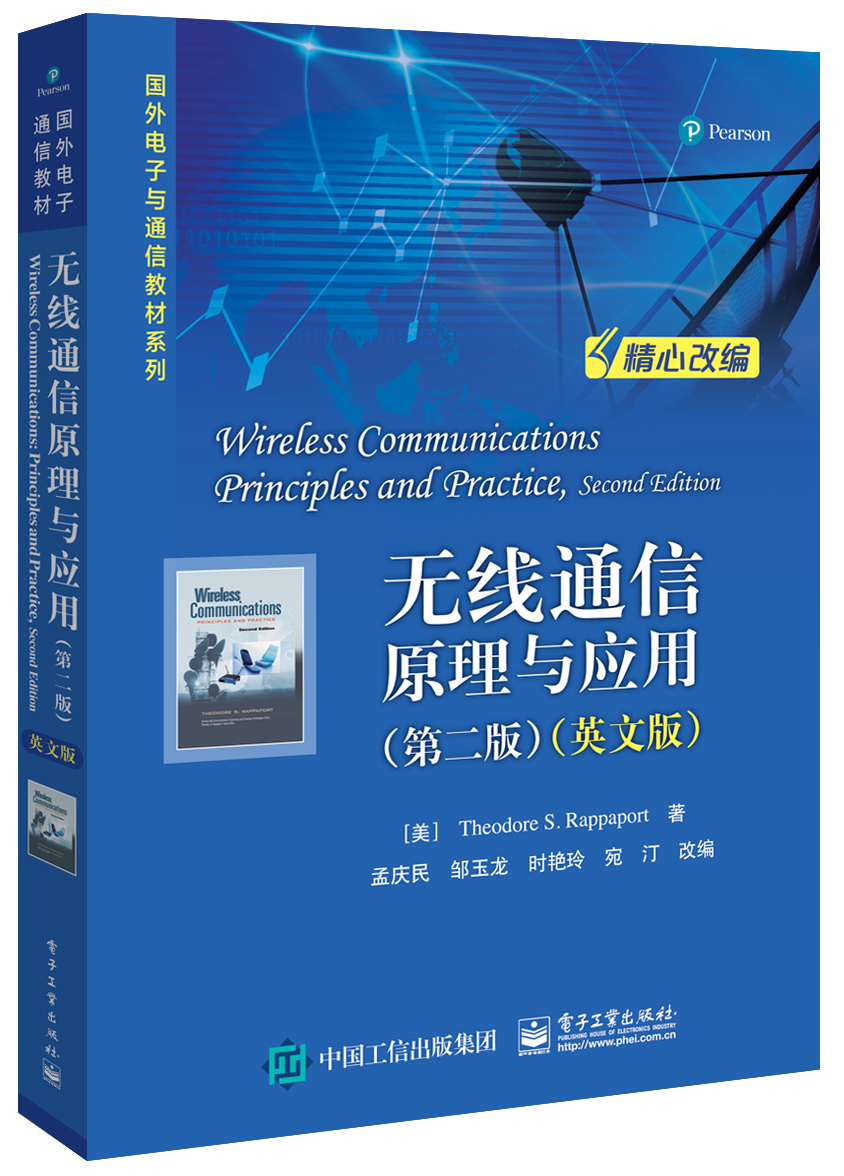
本书是无线通信课程的权威教材,面向那些已经熟悉诸如概率论、通信原理和基本电磁学等技术概念的学生与工程师。全书深入浅出地讨论了无线通信技术与系统设计方面的内容,包括无线网络涉及的所有基本问题,特别是3G系统和无线局域网的问题,并对无线网络技术进展和全球主要的无线通信标准给出了论述。全书共分8章,集中讲述了蜂窝的概念、移动无线电传播、调制技术、多址技术等,结合理论对无线通信系统的各个方面做了精辟论述和统计分析。
目录
Chapter 1 Introduction to Wireless Communication Systems
无线通信系统概述
1.1?Evolution of Mobile Radio Communications
移动无线通信的发展
1.2?Mobile Radiotelephony in the U.S.
美国移动无线电话
1.3?Mobile Radio Systems Around the World
全球移动通信系统
1.4?Examples of Wireless Communication Systems
无线通信系统的实例
1.4.1?Paging Systems
1.4.2?Cordless Telephone Systems
1.4.3?Cellular Telephone Systems
1.4.4 Comparison of Common Wireless Communication Systems
1.5 Trends in Cellular Radio and Personal Communications
蜂窝无线通信和个人通信的发展趋势
1.6 Problems
习题
Chapter 2 Modern Wireless Communication Systems
现代无线通信系统
2.1 Second Generation (2G) Cellular Networks
2G蜂窝网络
2.1.1 Evolution to 2.5G Mobile Radio Networks
2.1.2 Evolution for 2.5G TDMA Standards
2.1.3 IS-95B for 2.5G CDMA
2.2 Third Generation (3G) Wireless Networks
3G无线网络
2.2.1 3G W-CDMA (UMTS)
2.2.2 3G cdma2000
2.2.3 3G TD-SCDMA
2.3 Wireless Local Loop (WLL) and LMDS
无线本地环路(WLL)与LMDS
2.4 Wireless Local Area Networks (WLANs)
无线局域网(WLAN)
2.5 Bluetooth and Personal Area Networks (PANs)
蓝牙和个域网(PAN)
2.6 Summary
小结
2.7 Problems
习题
Chapter 3 The Cellular Concept—System Design Fundamentals
蜂窝的概念:系统设计基础
3.1 Introduction
概述
3.2 Frequency Reuse
频率复用
3.3 Channel Assignment Strategies
信道分配策略
3.4 Handoff Strategies
切换策略
3.4.1 Prioritizing Handoffs
3.4.2 Practical Handoff Considerations
3.5 Interference and System Capacity
干扰和系统容量
3.5.1 Co-channel Interference and System Capacity
3.5.2 Channel Planning for Wireless Systems
3.5.3 Adjacent Channel Interference
3.5.4 Power Control for Reducing Interference
3.6 Trunking and Grade of Service
中继和服务等级
3.7 Improving Coverage and Capacity in Cellular Systems
提高蜂窝系统容量
3.7.1 Cell Splitting
3.7.2 Sectoring
3.7.3 Repeaters for Range Extension
3.7.4 A Microcell Zone Concept
3.8 Summary
小结
3.9 Problems
习题
Chapter 4 Mobile Radio Propagation: Large-Scale Path Loss
移动无线电传播:大尺度路径损耗
4.1 Introduction to Radio Wave Propagation
无线电波传播介绍
4.2 Free Space Propagation Model
自由空间传播模型
4.3 Relating Power to Electric Field
电场和功率
4.4 The Three Basic Propagation Mechanisms
三种基本传播机制
4.5 Reflection
反射
4.5.1 Reflection from Dielectrics
4.5.2 Brewster Angle
4.5.3 Reflection from Perfect Conductors
4.6 Ground Reflection (Two-Ray) Model
地面反射(双线)模型
4.7 Diffraction
绕射
4.7.1 Fresnel Zone Geometry
4.7.2 Knife-edge Diffraction Model
4.7.3 Multiple Knife-edge Diffraction
4.8 Scattering
散射
4.8.1 Radar Cross Section Model
4.9 Practical Link Budget Design Using Path Loss Models
运用路径损耗模型进行实际的链路预算设计
4.9.1 Log-distance Path Loss Model
4.9.2 Log-normal Shadowing
4.9.3 Determination of Percentage of Coverage Area
4.10?Outdoor Propagation Models
室外传播模型
4.10.1 Longley–Rice Model
4.10.2 Durkin’s Model—A Case Study
4.10.3 Okumura Model
4.10.4 Hata Model
4.10.5 PCS Extension to Hata Model
4.10.6 Walfisch and Bertoni Model
4.10.7 Wideband PCS Microcell Model
4.11?Indoor Propagation Models
室内传播模型
4.11.1 Partition Losses (same floor)
4.11.2 Partition Losses between Floors
4.11.3 Log-distance Path Loss Model
4.11.4 Ericsson Multiple Breakpoint Model
4.11.5 Attenuation Factor Model
4.12?Signal Penetration into Buildings
建筑物信号穿透
4.13?Ray Tracing and Site Specific Modeling
射线跟踪和特定站址建模
4.14?Problems
习题
Chapter 5 Mobile Radio Propagation: Small-Scale Fading and Multipath
移动无线电传播:小尺度衰落和多径效应
5.1 Sm
无线通信系统概述
1.1?Evolution of Mobile Radio Communications
移动无线通信的发展
1.2?Mobile Radiotelephony in the U.S.
美国移动无线电话
1.3?Mobile Radio Systems Around the World
全球移动通信系统
1.4?Examples of Wireless Communication Systems
无线通信系统的实例
1.4.1?Paging Systems
1.4.2?Cordless Telephone Systems
1.4.3?Cellular Telephone Systems
1.4.4 Comparison of Common Wireless Communication Systems
1.5 Trends in Cellular Radio and Personal Communications
蜂窝无线通信和个人通信的发展趋势
1.6 Problems
习题
Chapter 2 Modern Wireless Communication Systems
现代无线通信系统
2.1 Second Generation (2G) Cellular Networks
2G蜂窝网络
2.1.1 Evolution to 2.5G Mobile Radio Networks
2.1.2 Evolution for 2.5G TDMA Standards
2.1.3 IS-95B for 2.5G CDMA
2.2 Third Generation (3G) Wireless Networks
3G无线网络
2.2.1 3G W-CDMA (UMTS)
2.2.2 3G cdma2000
2.2.3 3G TD-SCDMA
2.3 Wireless Local Loop (WLL) and LMDS
无线本地环路(WLL)与LMDS
2.4 Wireless Local Area Networks (WLANs)
无线局域网(WLAN)
2.5 Bluetooth and Personal Area Networks (PANs)
蓝牙和个域网(PAN)
2.6 Summary
小结
2.7 Problems
习题
Chapter 3 The Cellular Concept—System Design Fundamentals
蜂窝的概念:系统设计基础
3.1 Introduction
概述
3.2 Frequency Reuse
频率复用
3.3 Channel Assignment Strategies
信道分配策略
3.4 Handoff Strategies
切换策略
3.4.1 Prioritizing Handoffs
3.4.2 Practical Handoff Considerations
3.5 Interference and System Capacity
干扰和系统容量
3.5.1 Co-channel Interference and System Capacity
3.5.2 Channel Planning for Wireless Systems
3.5.3 Adjacent Channel Interference
3.5.4 Power Control for Reducing Interference
3.6 Trunking and Grade of Service
中继和服务等级
3.7 Improving Coverage and Capacity in Cellular Systems
提高蜂窝系统容量
3.7.1 Cell Splitting
3.7.2 Sectoring
3.7.3 Repeaters for Range Extension
3.7.4 A Microcell Zone Concept
3.8 Summary
小结
3.9 Problems
习题
Chapter 4 Mobile Radio Propagation: Large-Scale Path Loss
移动无线电传播:大尺度路径损耗
4.1 Introduction to Radio Wave Propagation
无线电波传播介绍
4.2 Free Space Propagation Model
自由空间传播模型
4.3 Relating Power to Electric Field
电场和功率
4.4 The Three Basic Propagation Mechanisms
三种基本传播机制
4.5 Reflection
反射
4.5.1 Reflection from Dielectrics
4.5.2 Brewster Angle
4.5.3 Reflection from Perfect Conductors
4.6 Ground Reflection (Two-Ray) Model
地面反射(双线)模型
4.7 Diffraction
绕射
4.7.1 Fresnel Zone Geometry
4.7.2 Knife-edge Diffraction Model
4.7.3 Multiple Knife-edge Diffraction
4.8 Scattering
散射
4.8.1 Radar Cross Section Model
4.9 Practical Link Budget Design Using Path Loss Models
运用路径损耗模型进行实际的链路预算设计
4.9.1 Log-distance Path Loss Model
4.9.2 Log-normal Shadowing
4.9.3 Determination of Percentage of Coverage Area
4.10?Outdoor Propagation Models
室外传播模型
4.10.1 Longley–Rice Model
4.10.2 Durkin’s Model—A Case Study
4.10.3 Okumura Model
4.10.4 Hata Model
4.10.5 PCS Extension to Hata Model
4.10.6 Walfisch and Bertoni Model
4.10.7 Wideband PCS Microcell Model
4.11?Indoor Propagation Models
室内传播模型
4.11.1 Partition Losses (same floor)
4.11.2 Partition Losses between Floors
4.11.3 Log-distance Path Loss Model
4.11.4 Ericsson Multiple Breakpoint Model
4.11.5 Attenuation Factor Model
4.12?Signal Penetration into Buildings
建筑物信号穿透
4.13?Ray Tracing and Site Specific Modeling
射线跟踪和特定站址建模
4.14?Problems
习题
Chapter 5 Mobile Radio Propagation: Small-Scale Fading and Multipath
移动无线电传播:小尺度衰落和多径效应
5.1 Sm
